


Think of managed website services as having a dedicated, expert crew for your website. It’s a comprehensive service where a provider handles all the technical heavy lifting—hosting, security, updates, and performance—long after your site has gone live. Essentially, it’s like having an IT department on-call, specifically for your online presence.
Why Your Website Needs More Than Just a Launch
Imagine your website is your new flagship store on the digital high street. The launch party is fantastic, but the real work begins the moment the doors open for business. That digital storefront needs constant attention, solid security, and a team to keep it running perfectly to welcome and serve your customers.
For many UK business owners, your expertise is in your craft, not in server administration. You might find yourself pulled away from what you do best, wrestling with technical headaches. Will that plugin update break everything? Is my site safe from the latest security threats? Why is it loading so slowly? These worries are real, and they can be a major drain.
The Shift from Project to Asset
It’s easy to fall into the trap of seeing your website as a one-and-done project. Build it, launch it, and move on. But a truly effective website is a living, breathing business asset. It needs continuous, professional care to generate a real return on your investment. Without it, your digital shopfront can quickly become outdated, vulnerable, and a frustrating experience for visitors.
This is exactly where managed website services step in. You’re not just buying hosting; you’re forming a partnership with a team of experts who handle all the technical complexities behind the scenes. This frees you up to concentrate on running and growing your business.
A website isn’t a “set it and forget it” tool. It’s an engine for growth that needs regular fuel and maintenance. Managed services provide the specialist mechanics to keep that engine tuned for peak performance.
The need for this kind of expert support is booming across the UK. The UK Managed Services market, which includes all the key tasks of website management, was valued at £15.3 billion in 2023 and is expected to climb to over £28.2 billion by 2032. This surge is fuelled by businesses looking for smart, cost-effective ways to manage their digital operations and tackle ever-growing cybersecurity threats—a pain point especially felt by small businesses running on platforms like WordPress. You can read the full research about the UK Managed Services market to see the data for yourself.
At the end of the day, choosing a managed service is a strategic move to protect your investment. It ensures your site remains a powerful tool for attracting and keeping customers, rather than becoming a source of stress and a drain on your time and money.
What a Managed Website Service Actually Does for You
So, let’s pull back the curtain on what you’re really getting with a managed website service. The best way to think about it is like having a top-tier mechanic on retainer for your business vehicle. You get to focus on driving—landing new clients, making sales, growing your brand—while the experts handle the engine tuning, security checks, and all the fiddly maintenance. A managed service does precisely that, but for the technical engine of your website.
It’s not just one thing; it’s a whole support system built from several essential tasks. Each one is designed to keep your site running fast, staying secure, and always being there for your customers. Let’s break down the core components to see exactly what you’re paying for and why every piece is so crucial for a healthy, high-performing online presence.
High-Performance Hosting: The Foundation of Speed
At the very heart of it all is high-performance hosting. This isn’t your bog-standard, shared server space you find in budget packages. We’re talking about an environment specifically configured for platforms like WordPress, fine-tuned from the ground up to serve your pages to visitors in the blink of an eye. Speed isn’t just a nice-to-have anymore; a one-second delay in page load time can cause a 7% nosedive in conversions.
How do managed providers get this done?
- Optimised Server Stacks: The software running the server (like PHP and MySQL) is configured for peak performance, not just general-purpose use.
- Advanced Caching: Smart caching systems create and store ready-made copies of your pages. This means they can be delivered almost instantly, without the server having to rebuild them from scratch for every single visitor.
- UK-Based Servers: For UK businesses, this is a game-changer. Housing servers in the UK physically shortens the distance your data has to travel, which gives your local customers a noticeably faster experience.
The tech behind hosting can get complicated, but the result is simple: a faster website. If you’re keen to understand the nuts and bolts, you can learn more about how website hosting works and see what really sets a premium setup apart.
This graphic perfectly sums up how managed services let you shift your focus from putting out technical fires to actually growing your business.
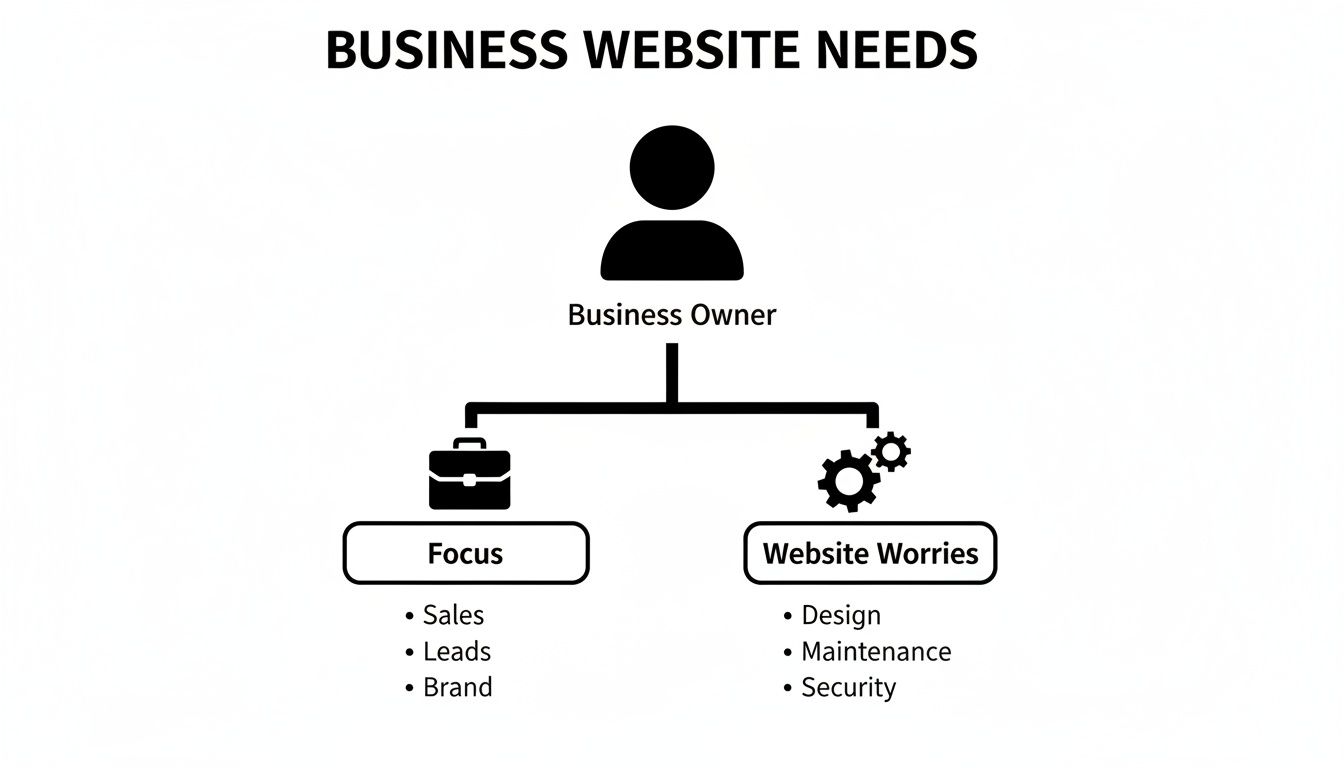
As you can see, the whole point is to hand off the “Website Worries” so you can reclaim your time and pour that energy back into what you do best.
Proactive Updates and Security Patching
An unmanaged website is a sitting duck. The software that powers your site—WordPress core, your theme, all those plugins—is constantly being improved and patched for security holes by developers. A managed website service takes this critical, and often risky, task completely off your plate.
And it’s not just about blindly clicking the ‘update’ button. A proper provider will first test updates on a staging copy of your site. This simple step ensures an update won’t crash your live website or cause conflicts. This proactive maintenance seals up security vulnerabilities before hackers can find and exploit them, keeping your business data and customer information safe.
Advanced Security and Threat Monitoring
Beyond just updates, a managed service wraps your site in multiple layers of security. Think of it as having a dedicated security team guarding your digital shopfront, 24/7. This goes way beyond a basic firewall.
A managed security approach means your provider is actively hunting for threats, not just waiting for an alarm to go off. It’s the difference between having a simple lock on the door and having a comprehensive surveillance and response system.
This usually includes a powerful trio of tools:
- Web Application Firewall (WAF): A specialised shield that filters out malicious traffic and hacking attempts before they even get near your website.
- Malware Scanning: Regular, automated sweeps that hunt for and eliminate any malicious code that might have slipped through the net.
- Brute-Force Protection: Smart systems that automatically block suspicious IP addresses trying to guess your password, slamming the door on unauthorised access.
Automated Backups: Your Ultimate Safety Net
Even with the best defences in the world, things can still go sideways. A rogue update or a simple human error could cause a catastrophic failure. This is where automated backups become your most valuable insurance policy.
A good managed provider schedules frequent, reliable backups of your entire website—every file, every database entry, everything. These backups are stored securely in a separate location, ready to be deployed at a moment’s notice. It means that if the worst happens, your site can be restored quickly and with minimal data loss. The peace of mind this gives you is priceless.
Uptime Monitoring: Your Digital Doorman
Finally, a managed service is always watching. This is done through constant uptime monitoring, where automated systems check on your website from different locations around the world, every few minutes.
If your site ever goes down, the technical team gets an instant alert—often before you or your customers have even noticed there’s a problem. They can then jump into action immediately, diagnose the issue, and work to get you back online. It’s like having a doorman who ensures your digital doors are always open for business.
The True Business Impact of Managed Services

Technical specs like “proactive updates” and “optimised caching” are all well and good, but they don’t really capture the full picture. The real value of managed website services is how those technical tasks translate directly into tangible business results. It’s about turning backend chores into more time, less stress, and a healthier bottom line.
Think about the hours a business owner can lose trying to fix a mysterious plugin conflict or a website that’s suddenly crashed. Every one of those hours is a direct loss—time that should have been spent on marketing, speaking to customers, or developing new products. Managed services give you that time back.
Reclaiming Time and Eliminating Stress
Picture this: it’s the week before Black Friday, and your online shop is geared up for its biggest sales weekend. Then, without warning, your website slows to a crawl as the first wave of traffic hits. If you’re managing everything yourself, you’re the one on the hook, frantically trying to diagnose server issues instead of focusing on shipping orders.
A managed provider, on the other hand, is already prepared for this. Their team is monitoring performance, ready to scale up resources as needed, making sure your site stays fast and responsive. Your focus remains on maximising sales, not on playing the role of an emergency IT technician. This isn’t just about convenience; it’s a strategic advantage that protects your revenue and reputation when it counts the most.
Managed services shift your role from firefighter to business strategist. You stop reacting to technical emergencies and start proactively investing your energy in growth. This peace of mind is one of the most significant, yet often overlooked, returns on investment.
When you weigh the modest monthly investment against the devastating cost of a security breach or a day of downtime, the value of this proactive support becomes crystal clear.
Connecting Performance to Profitability
A well-managed website doesn’t just run smoothly—it actively fuels your business’s growth. The technical improvements a managed service provider delivers create a direct line to the key performance indicators that drive revenue and build customer loyalty.
These aren’t just abstract benefits. They show up in your analytics and in your bank account in several important ways:
- Improved SEO Rankings: Search engines like Google love fast, secure, and reliable websites. A managed service optimises all three, giving you a solid technical SEO foundation that helps you rank higher and attract more organic traffic.
- Higher Conversion Rates: A faster website means a better user experience. Customers are far more likely to complete a purchase or fill out a form on a site that loads instantly and works flawlessly.
- Enhanced Customer Trust: A secure, professionally maintained website sends a powerful signal of reliability. When customers know their data is safe, they feel more confident doing business with you, which leads to repeat purchases and glowing reviews.
A Growing Industry Built on Business Support
This model has proven so effective that it has spawned a massive support industry right here in the UK. In March 2025, the UK managed service providers (MSPs) market was home to 12,867 active firms, generating an astonishing £51 billion in annual revenue. A key driver of this growth was the boom in ‘Application and Hosting’ services—the very support WordPress and WooCommerce businesses depend on. You can dig deeper into the scale of the UK MSP market and its economic impact to see just how vital this sector has become.
At the end of the day, managed website services are a direct enabler of business growth. By taking the technical weight off your shoulders, they free you up to do what you do best: run your company. If you’d like to learn more, we’ve gathered some extra insights on how to use your website to drive business forward. This lets you focus on the big picture, confident that your digital foundation is solid, secure, and ready to scale with your ambitions.
How to Choose the Right UK Managed Service Provider
Picking a partner to manage your website is a huge decision for your business. Let’s be honest, not all providers are the same, and the right one can be the difference between smooth sailing and a constant stream of technical headaches. This is a practical, no-fluff guide to help you ask the right questions and choose the best partner for your UK business.
You need to look past the shiny marketing and get into the nitty-gritty of what really matters. It’s all about making sure their servers, their team’s know-how, and their support align with what your website actually needs. Let’s break down the critical things to look into.
Prioritise UK-Based Infrastructure
The physical location of your website’s server matters. A lot. For any business with a UK audience, having servers based right here in the UK isn’t just a nice-to-have; it’s a must.
Here’s the simple breakdown of why:
- Faster Loading Speeds: Think of it like posting a letter. A letter sent from London to Manchester arrives much faster than one sent from New York. It’s the same with data. A shorter distance means quicker delivery, which translates to faster page loads, happier visitors, and better SEO.
- GDPR Compliance: Keeping your website’s data on UK soil is the simplest way to stay on the right side of GDPR rules. Storing data overseas can open a can of legal worms that you can easily avoid by just keeping it local.
Your first question to any potential provider should always be: “Where are your servers physically located?” If the answer is anything but a clear “in the UK,” you should think twice.
Verify Platform-Specific Expertise
General IT support is one thing, but deep, hands-on experience with your specific website platform is something else entirely. If your site is built on WordPress and WooCommerce, you need a team that lives and breathes that world. A provider that specialises in managed WordPress services has likely seen—and fixed—every weird issue you could possibly imagine.
This specialisation means their entire setup, from the servers to the support desk, is optimised for WordPress. They can sniff out plugin conflicts, solve theme glitches, and fine-tune databases far more effectively than a general host. They get the quirks of the platform, which means faster fixes and a better-performing site for you.
A general managed service provider is like a GP—great for a check-up. A managed WordPress provider is like a specialist surgeon—the expert you call when the procedure is critical and you can’t afford any mistakes.
Scrutinise Security Measures
Let’s face it, security is one of the biggest reasons to opt for a managed service in the first place, so you need to dig deeper than the basics. A free SSL certificate is standard these days; real security is about building a fortress around your site.
Ask potential providers to walk you through their security stack. You’re looking for proactive defences that stop threats in their tracks, not just clean up the mess afterwards.
Key security layers to look for:
- Web Application Firewall (WAF): This is your digital bouncer, filtering out shady traffic and blocking common attacks before they even get to your website’s front door.
- Proactive Malware Scanning: The provider should be constantly and automatically scanning for malicious code. This is your early warning system for hidden threats.
- Brute-Force Attack Protection: This feature locks out automated bots that try to guess your password, preventing one of the most common ways sites get hacked.
Demand Transparent Pricing and Clear Policies
Hidden fees and fuzzy service agreements can quickly sour a good deal. A provider you can trust will have clear, upfront pricing with no nasty surprises. Read through what’s included in your plan, and just as importantly, what’s not.
Pay special attention to their backup policy. How often do they take backups—daily, weekly? Where are they stored and for how long? The crucial question is whether restoring a backup is included or costs extra. You don’t want to find that out during an emergency.
The same goes for support. Does your plan cover a certain number of support hours? How do you ask for help, and what are their guaranteed response times? Getting clear answers to these questions upfront saves a world of frustration later. If you’re weighing your options, getting a handle on the basics of self-hosting can give you a real appreciation for what a managed service takes off your plate. You can learn more about the basics of website hosting to see the full picture.
Ultimately, choosing the right provider is about finding a true partner who is invested in protecting your online presence. Use this checklist as your guide, and you’ll be well on your way to picking a managed service that will help your business thrive for years to come.
Unpacking the Website Migration Process
Let’s be honest, the thought of moving your entire website can be terrifying. It feels a bit like performing open-heart surgery on your business—one wrong move and you risk costly downtime and technical chaos.
This is precisely where a professional managed website services provider shines. They take this complex, stressful job completely off your plate. Instead of a potential disaster, you get a seamless, expert-led transition. You won’t be navigating this alone; a good provider has a well-practised, methodical approach to ensure every file, image, and customer order makes it to its new home safely.
The Proven Path to a Flawless Move
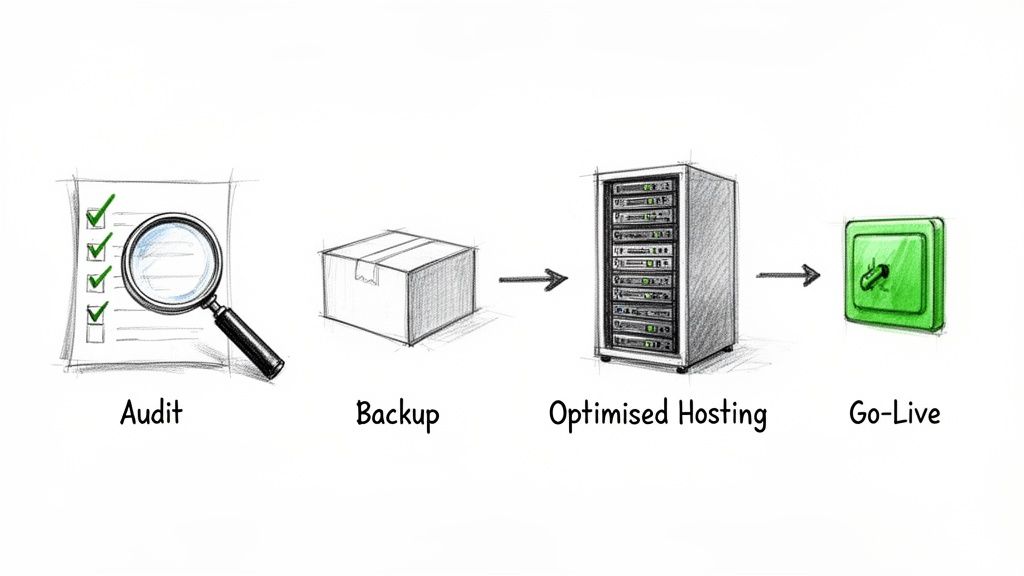
Think of it as a white-glove moving service for your digital storefront. The entire process is broken down into clear, manageable stages to eliminate guesswork and minimise risk. A typical expert-led migration follows these exact steps.
- Initial Site Audit and Consultation: First, the team does a deep dive into your current website. They’ll assess its size, complexity, and any custom setups to create a tailored migration plan.
- Creating a Secure Backup: Before a single file is moved, a complete and verified backup of your entire site is taken. This is your safety net, ensuring your data is 100% protected.
- Staging and Rigorous Testing: Your website is then cloned to a private staging area on the new server. Here, the real work begins. The team meticulously tests every link, every form, and every feature to make sure it all works perfectly in the new environment.
- The Precision Go-Live Switch: Once you’ve approved the staged site, the final switch happens. This is carefully scheduled for a low-traffic period, which means minimal disruption and often zero downtime for your customers.
The goal of a managed migration is simple: you go to sleep with your website on an old server and wake up with it running faster and more securely on a new one, with no one having noticed the move.
Keep Your Focus Where It Matters: Your Business
This hands-off approach is a huge advantage for UK businesses. While the broader Web Design Services market saw a decline from 2020-2025, specialised services like ‘Application and Hosting’ grew to represent 33% of the sector. This trend shows that businesses are increasingly outsourcing the technical heavy lifting.
Why? It frees up their internal teams to concentrate on what they do best—growing the business—instead of getting bogged down in website logistics. You can discover more insights about the UK Web Design market size on ibisworld.com.
Ultimately, a managed migration is more than just a technical task. It’s your first step towards unlocking the full power of a faster, more secure website, without any of the stress that usually comes with it.
Your Questions Answered: Managed Website Services
Deciding to go with managed website services is a big move, and it’s completely normal to have questions before you jump in. We get it. To help you figure out if it’s the right choice for your business, here are some straight-talking answers to the questions we hear most often from UK business owners.
This should clear up any lingering doubts and help you move forward with confidence.
Is Managed Hosting Really Worth the Extra Cost?
In a word, yes. It’s tempting to look at the low price of unmanaged shared hosting, but it’s a perfect example of ‘you get what you pay for’. Think of your managed service fee not as a cost, but as an insurance policy for your most valuable online asset.
That small monthly investment is often a fraction of what a single hour of downtime, a messy data breach, or lost sales from a slow website could cost you. You’re swapping unpredictable, reactive expenses for a predictable, proactive plan that protects your income and your reputation.
How Much Technical Knowledge Do I Need?
Practically none. That’s the whole point. A managed service is designed to lift all the technical weight off your shoulders. You don’t need to know the first thing about patching security holes, optimising a database, or figuring out why a server has suddenly gone offline.
Your job is to focus on what you’re good at—running your business. Your provider’s job is to make sure your website just works. It’s like having an expert IT team on standby, without the eye-watering cost of hiring them yourself.
“A key benefit of managed services is delegation. You are handing over the keys to the engine room to a specialist crew, freeing yourself to stay on the bridge and steer the ship.”
What Is the Difference Between Managed WordPress and General Managed Hosting?
This is a really important one. General managed hosting is a decent step up, but managed WordPress hosting is in another league entirely if your site is built on WordPress. This specialisation means everything, from the server configuration to the security rules, is purpose-built for the platform.
The support team are also WordPress specialists. When you have a problem, they aren’t just reading from a script; they’ve likely seen and fixed the exact same issue hundreds of times before. That focused expertise means better performance, stronger security, and much faster fixes when you need them.
Will a Managed Provider Help if My Website Breaks?
Absolutely. This is a core part of the service. A good managed provider doesn’t just give your site a place to live; they look after it. When something inevitably goes wrong—a plugin update causes a conflict, or a mysterious error pops up—their support team is your first call.
Instead of losing hours searching through online forums for a fix, you just get in touch with your provider. They have the expertise and the tools to find the problem and get you back online fast. It’s the peace of mind that comes from knowing a professional has your back, 24/7.
Ready to stop worrying about your website and start focusing on growth? Vivihosting delivers expert, UK-based managed WordPress services that keep your site fast, secure, and always online. Let our team handle the technical details so you can get back to business. Explore our plans and see how we can help at https://vivihosting.com.