


At its core, a website maintenance package is a pre-agreed set of services designed to keep your site in top working order. Think of it as a retainer for a team of experts who handle all the technical, behind-the-scenes tasks—like updates, security checks, and backups—for a simple, fixed monthly fee. It’s all about taking the technical weight off your shoulders.
Why Your Website Needs Regular Maintenance
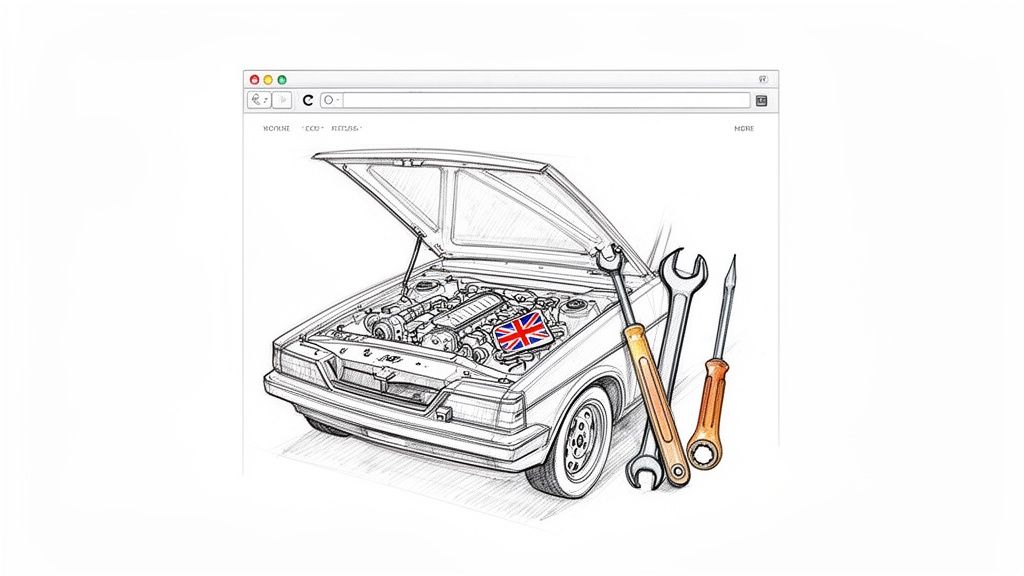
It’s tempting to see your website as a one-and-done project, a digital brochure that just sits there. But that’s a dangerous misconception. A better analogy is to think of it as the engine powering your business. Like any car, it needs regular tune-ups to keep it running smoothly, prevent breakdowns, and protect its value.
You wouldn’t dream of driving your car for years without an oil change, right? The same logic applies directly to your digital storefront. Neglecting it is a huge gamble.
For UK small and medium enterprises (SMEs), this proactive approach isn't just a good idea—it's essential. The consequences of neglect are simply too high. Think about it: an unexpected crash during a crucial sales campaign, a security breach that shatters customer trust, or a slow-loading site that sends visitors straight to your competitors. All of these nightmares are preventable.
Shifting from Cost to Investment
It’s easy to fall into the trap of viewing website maintenance as just another monthly bill. The smarter perspective is to see it as a crucial investment in the health and continuity of your business. A professional maintenance package is your insurance policy, safeguarding your most valuable digital asset 24/7.
This ongoing care ensures your website delivers a consistently positive experience for every visitor, which is the bedrock of growth.
Here’s what regular maintenance really delivers:
- Enhanced Security: It’s your first line of defence, actively protecting your site from hackers and malware.
- Improved Performance: A fast, responsive site keeps visitors happy and engaged, which search engines love too.
- Better Reliability: Minimising downtime is critical. Every minute your site is offline is potential lost revenue.
- Peace of Mind: You get to focus on running your business, not wrestling with technical gremlins.
Neglecting maintenance is like building a beautiful shop but never locking the doors or cleaning the windows. Eventually, problems will arise that are far more expensive to fix than the cost of routine upkeep.
This isn't just our opinion; the market trends tell the same story. The UK web performance market, which covers maintenance and optimisation, is projected to hit a staggering £697.8 million by 2030. This growth isn't accidental. It signals a major strategic shift, with more UK businesses choosing to outsource these critical tasks to specialists.
It’s a clear sign that business owners are focusing on building a resilient foundation for their digital success. You can dive deeper into these trends in the latest market reports from Grand View Research on the UK web performance market.
What Should a Quality Maintenance Package Actually Include?
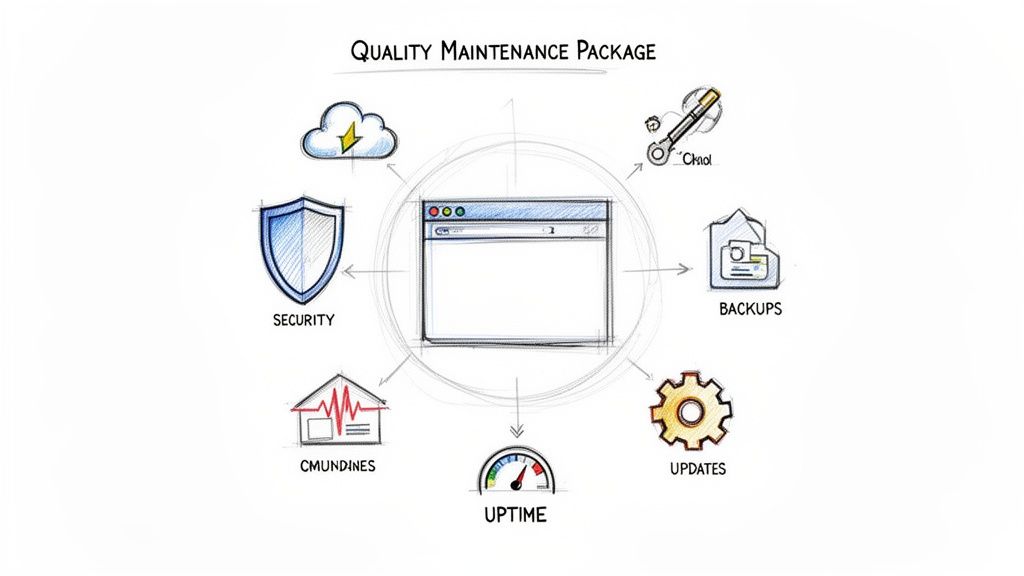
So, what are you actually paying for when you sign up for a website maintenance package? Let’s get beyond the marketing speak and look at the essential services that keep your digital presence healthy and effective.
Think of it less like an optional extra and more like the regular servicing for a company vehicle. A good plan isn't just about calling a mechanic when something breaks; it's about proactive, preventative care that stops problems from happening in the first place. These are the absolute fundamentals you should expect.
Consistent Software Updates
One of the most vital jobs is keeping all your software up to date. This means your website's core system (like WordPress), its theme, and all its plugins. It’s exactly like the app updates you get on your phone – developers are constantly releasing new versions to fix bugs, patch security vulnerabilities, and sometimes add new features.
Putting off these updates is a huge gamble. In fact, outdated software is the number one way hackers gain access to a website. A proper maintenance plan ensures these updates are handled by a professional, tested for any compatibility issues, and applied quickly to keep your site secure and running smoothly.
Proactive Security Monitoring
Imagine having a dedicated security guard for your digital shop front, on duty 24/7. That's precisely what proactive security monitoring delivers. This service is always on the lookout for malware, suspicious login attempts, and other threats, stopping them dead in their tracks.
The goal here is prevention, not just cleanup. For any UK business, particularly if you handle customer data, this is non-negotiable. A single security breach can shatter customer trust and result in serious financial and legal headaches.
A website without active security monitoring is like leaving your shop door unlocked on the high street. It’s not a question of if you’ll have a problem, but when.
Effective security isn't just one thing; it's a multi-layered defence:
- Firewall Protection: This acts as a digital bouncer, blocking malicious traffic before it even gets to your site.
- Malware Scanning: Regular, automated scans search for and neutralise any nasty code that might have found a way in.
- Blacklist Monitoring: This check makes sure your site hasn't been flagged as unsafe by search engines, which would kill your organic traffic overnight.
Reliable Backups and Restoration
Even with the best security in the world, things can still go wrong. A buggy update, a server glitch, or simple human error can knock your site offline. This is where a rock-solid backup and restoration plan becomes your lifeline.
A quality package will take regular, automated backups of your entire website – files, database, the lot. But just having a backup isn't enough. The real value is in the ability to restore your site quickly and completely, with as little downtime as possible.
Good providers store these backups in a secure, off-site location. This means that even if the entire server goes down, your data is safe and sound elsewhere. That kind of peace of mind is priceless. You can see how different providers approach this by exploring their managed website services.
To simplify, here’s a breakdown of the core components you should look for in any maintenance package.
Core Components of a Website Maintenance Package
| Service Component | What It Is | Why It Matters |
|---|---|---|
| Software Updates | Regularly updating the website’s core, theme, and plugins. | Closes security loopholes and fixes bugs, keeping the site stable and secure. |
| Security Monitoring | Proactive scanning for malware, threats, and brute-force attacks. | Prevents hacks before they happen, protecting your data and reputation. |
| Backups & Restoration | Automated, regular copies of your entire website, stored off-site. | Provides a safety net to quickly recover from data loss or site crashes. |
| Uptime Monitoring | Constant checks to ensure your website is online and accessible. | Minimises downtime by providing instant alerts when the site goes offline. |
| Performance Tuning | Optimising site speed through caching, image compression, and code tweaks. | Improves user experience and SEO, as faster sites rank better and convert more. |
These services form the foundation of a plan that doesn't just fix problems but actively works to ensure they never arise, keeping your website an asset rather than a liability.
Uptime and Performance Monitoring
Is your website actually online right now? You probably assume it is, but small, frequent outages can happen without you even knowing. Uptime monitoring tools check on your site every few minutes from different locations around the globe, instantly notifying your maintenance team if it goes down.
This allows them to spring into action immediately, often getting the site back online before you or your customers notice a thing. Alongside this, performance monitoring keeps an eye on your site's loading speed. Research consistently shows that nearly 40% of users will leave a site that takes more than three seconds to load. A slow website is a leaky bucket, costing you customers and hurting your search engine rankings.
By looking after these critical metrics behind the scenes, a maintenance package ensures your website is always open for business, fast, and professional for every single visitor.
Advanced Support and Performance Tuning
While the core essentials like updates, security, and backups are the bedrock of any solid website maintenance plan, the advanced services are what really move the needle. This is where we stop just 'keeping the lights on' and start actively tuning the engine of your online presence for peak performance.
Think of it like this: basic maintenance is your car’s annual service and MOT. It’s essential. Advanced support, on the other hand, is like bringing in a specialist mechanic to fine-tune the engine, upgrade the suspension, and tweak the aerodynamics. The aim isn't just to keep the car on the road; it's to make it faster, more efficient, and ready to win.
These premium services are all about driving tangible business results—improving the experience for your visitors, boosting your visibility on Google, and ultimately, making it easier for customers to buy from you.
Driving Business Growth with Performance Optimisation
Let's be blunt: a slow website kills business. If a page takes more than a couple of seconds to appear, people don't hang around—they just leave. Performance tuning is the art and science of making your website as fast and responsive as humanly possible.
This isn't a one-and-done fix. It’s a combination of different techniques working together:
- Advanced Caching: This is a clever way of storing ready-made versions of your web pages. When someone visits, the server can deliver the page almost instantly instead of building it from scratch every time. It’s a game-changer for speed.
- Image and Asset Optimisation: Huge, uncompressed images are the number one cause of slow websites. This process shrinks file sizes without making them look blurry, ensuring your site loads quickly, even on a weak mobile connection.
- Database Clean-up: Over time, your website's database gets bogged down with junk—old post revisions, spam comments, and temporary files. A regular clean-up keeps it lean and mean, so it can fetch information in a flash.
Performance isn't just a number on a report; it's a fundamental part of the customer experience. A fast, snappy website feels more professional, builds trust, and encourages people to stick around and explore what you have to offer.
The speed of your site is often directly linked to the quality of its underlying digital foundation. For a closer look at how all these pieces fit together, our guide on how does website hosting work is a great place to start.
Dedicated Support for E-commerce and WooCommerce
If you're selling online, the pressure is even greater. An e-commerce site, particularly one built on a platform like WooCommerce, has a unique set of demands that a standard business website just doesn't face. You're dealing with secure transactions, managing stock levels, and hoping for huge traffic spikes during sales events.
Specialised WooCommerce support in a premium website maintenance package is designed to handle these exact challenges. It means ensuring your payment systems are secure and working flawlessly, fine-tuning the checkout to reduce abandoned carts, and making sure your site doesn't crash under the weight of Black Friday traffic.
SEO Health Checks and Expert Assistance
Finally, top-tier packages often include services that directly feed into your marketing. An SEO health check is a technical deep-dive into your site, hunting for issues that could be holding you back in Google's rankings—things like broken links, poor mobile usability, or missing page descriptions.
This kind of proactive, expert help is becoming the norm. In fact, the UK's home services market, a sector that includes everything from plumbing to digital infrastructure management, generated an enormous £28.7 billion in 2023. This points to a massive appetite among British businesses for reliable, outsourced expertise, a trend confirmed by market analysis from Verified Market Research.
And let’s not forget the value of having a developer on call. Instead of desperately searching for a freelancer just to change a button colour or add a new contact form, you can simply use the support time included in your plan. It turns your maintenance provider into a genuine partner, ready to help your website adapt and grow right alongside your business.
How to Choose the Right Maintenance Package

Choosing a website maintenance package can feel a bit like Goldilocks trying to find the right porridge. With so many options, it’s easy to either overspend on services you don’t need or, far worse, under-protect your most valuable digital asset. The goal is to find that "just right" plan that fits your business perfectly.
This isn’t about just grabbing the cheapest or the most feature-packed option. It's a strategic decision. You need to weigh up your budget, how complex your website is, and where you see your business heading in the future. A simple framework can cut through the noise and make this choice straightforward.
First things first: take an honest look at your website’s role in your day-to-day operations. Getting this clear in your head will immediately point you in the right direction.
A Quick Checklist for Your Decision
Before you even glance at a pricing table, ask yourself these three crucial questions. Think of your answers as a compass, guiding you toward the right package.
- How critical is my website to daily operations? If your site is your main engine for leads or sales, its uptime and performance are non-negotiable. A heavy reliance like this justifies a more comprehensive plan with faster support.
- Am I selling products online? An e-commerce store has a whole different level of complexity compared to a simple brochure site. You're handling customer data, payment gateways, and stock levels—all of which demand top-tier security and specialised support.
- How much technical support will I realistically need? Be honest here. If the thought of troubleshooting a plugin makes you break out in a cold sweat, or you know you'll want help with small tweaks, a package with included support time is a must.
Your answers will quickly tell you whether a basic, professional, or premium plan is your best starting point. It's just common sense: a local plumber's portfolio site has very different needs to a busy online shop.
This flowchart maps out a simple decision-making process, especially if you’re weighing up your need for advanced support around site speed, SEO, and technical help.
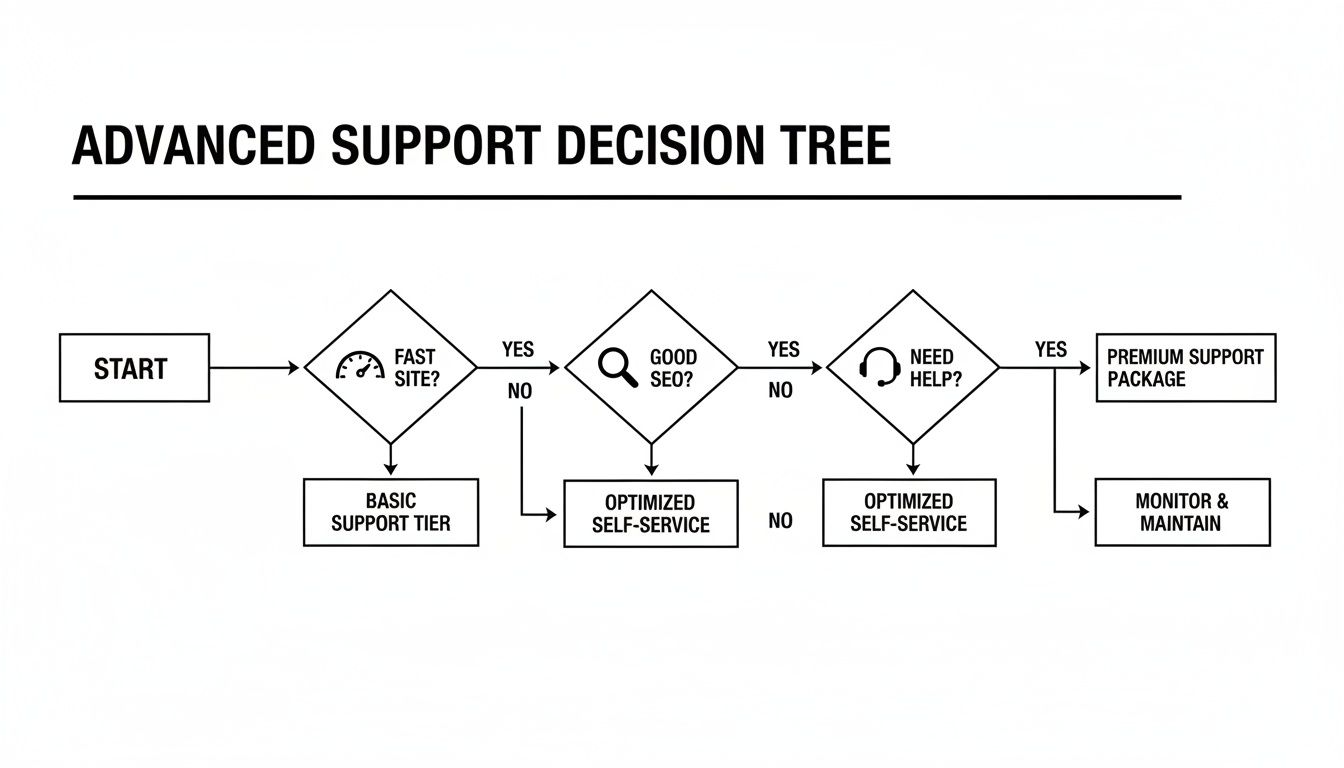
As the decision tree shows, the more you depend on top performance and hands-on help, the more you’ll get out of an advanced package that bundles these features in.
Matching Your Business Type to the Right Plan
Let's ground this in some real-world examples for UK businesses. Different business models naturally have different priorities when it comes to maintenance.
A small local business—think a café or a tradesperson—with a static website that’s mainly for contact info and opening hours can probably get by just fine on a Starter package. It covers the essentials like security, updates, and backups, keeping the site online and secure without costing a fortune. It’s a reliable digital business card.
Now, consider a growing service-based business, like a marketing agency or a consultancy. Their website is a key tool for generating leads. They should be looking at a Professional plan. This level usually offers more frequent backups, performance tuning to keep the site zippy, and a bit of dedicated support time for minor changes. It’s a perfect match for a business where the website is actively working to bring in new clients.
For e-commerce, the stakes are completely different. The UK's online retail market is booming, and for these businesses, solid website maintenance packages are an absolute must-have. You simply can't afford downtime or security breaches when customer trust and revenue are on the line. As highlighted in a report on the UK e-commerce market by Netguru, managed services are vital for staying competitive.
For any WooCommerce store or a high-traffic commercial site, a Premium package isn’t a luxury—it’s the only sensible choice. The daily backups, advanced security, and priority support are what you need to protect your income and your customers' data.
To help you visualise this, here’s a quick comparison of what you might find in typical maintenance plans.
Maintenance Plan Feature Comparison
This table breaks down how features scale across different tiers, helping you match a plan to your website’s specific demands—whether it’s a simple blog or a complex e-commerce platform.
| Feature | Starter Plan | Professional Plan | Premium Plan |
|---|---|---|---|
| WordPress/Plugin Updates | Monthly | Weekly | Daily |
| Backups | Weekly | Daily | Daily, plus on-demand |
| Security Monitoring | Standard scans | Advanced firewall & malware scans | Proactive threat prevention & cleanup |
| Uptime Monitoring | Included | Included with faster alerts | Included with priority response |
| Support Time | Email support only | Up to 1 hour per month | Up to 3 hours per month with priority access |
| Performance Tuning | Basic optimisation | Caching & image optimisation | Full-stack performance tuning & CDN integration |
| WooCommerce Support | Not included | Basic support | Specialised support for store & payment gateways |
| Reporting | Basic monthly report | Detailed monthly report | Customised monthly report with strategic insights |
As you can see, the right plan is less about price and more about value. The cost of a premium plan is tiny compared to the potential cost of a security breach or significant downtime for an online store.
Evaluating Providers and Finalising Your Choice
Once you’ve figured out the right tier for your business, the last step is to compare providers. Look past the headline price and dig into the details. A trustworthy provider will be completely transparent, clearly listing what’s included in their website maintenance packages with no nasty surprises or hidden fees.
Also, think about their expertise. Do they specialise in your platform, like WordPress? That deep, focused knowledge can be a lifesaver. This often ties back to the quality of their hosting, a fundamental piece of the puzzle for anyone serious about their online presence. If you're curious about the technical side of things, our guide on how you can host your own website is a great place to start.
Ultimately, choosing the right package is about finding a reliable partner who gets what you’re trying to achieve. By taking this measured approach, you can confidently pick a plan that doesn't just protect your website but actively helps it grow.
The True Cost of Neglecting Your Website
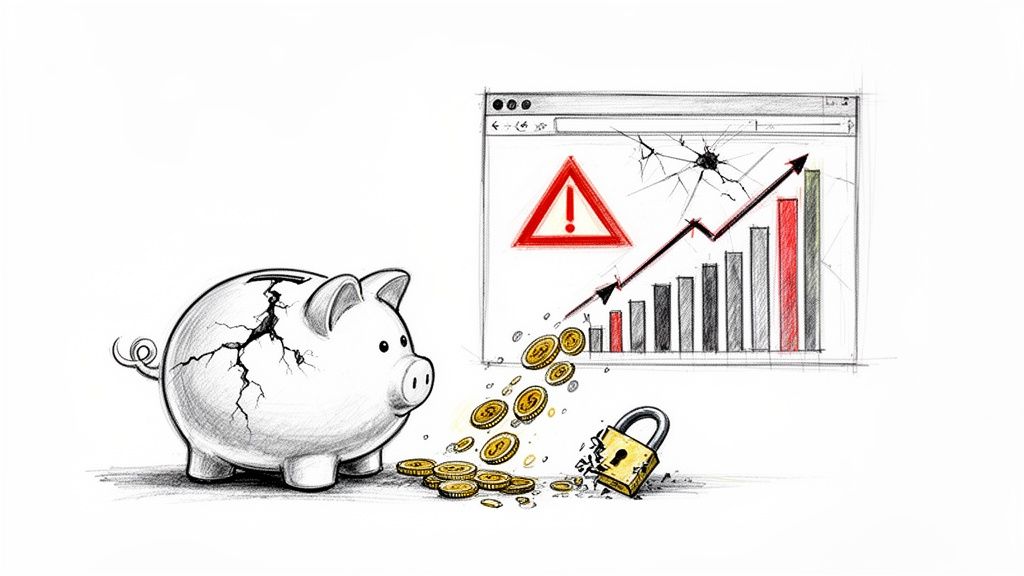
It’s tempting to look at a website maintenance package as just another line item on the monthly budget. But thinking this way misses the forest for the trees. Skipping professional maintenance isn't a savvy cost-cutting move; it’s a high-stakes gamble where the potential losses are enormous. The real expense isn't the predictable monthly fee—it's the unpredictable and often crippling cost of cleaning up a disaster.
These aren't just vague what-ifs. They are real, tangible threats that can derail a business almost overnight. When you opt out of regular maintenance, you're essentially betting that none of them will happen to you.
The Staggering Price of Emergency Repairs
A hacked website is a full-blown crisis. Suddenly, you're in a desperate scramble to find an expert who can fix it, and the cleanup is rarely simple or cheap. Emergency developers charge a premium for their urgent assistance, and the bill can easily climb into the thousands just to get your site back online and plug the holes.
This frantic, reactive approach is always, without exception, more expensive than proactive care. Trust me, the last thing you want is to be hunting for a specialist at midnight while your business is bleeding money.
Revenue Lost to Downtime
Every single minute your website is offline, it's not working for you. No sales are coming in, no leads are being captured, and no customers are being helped. For an e-commerce store, just a few hours of downtime during a busy sales period can mean a devastating loss of revenue—money you can never get back.
The fee for a professional website maintenance package is not an expense. It's affordable insurance against the unpredictable and potentially ruinous costs of a digital disaster, safeguarding your revenue and reputation.
And it gets worse. Downtime sends a powerful message to anyone who tries to visit: "we're unreliable." Every moment your site is down, your brand's credibility takes another hit.
Irreparable Damage to Brand Reputation
In business, trust is your most valuable asset. A security breach that leaks customer data can destroy that trust in an instant. The fallout from a breach goes far beyond the immediate cost of fines and technical repairs.
The long-term damage to your reputation can be much harder to fix:
- Loss of Customer Trust: People will think twice before buying from a company that couldn't keep their personal information safe.
- Negative Publicity: A data breach can quickly become a PR nightmare, with bad press and negative social media posts spreading like wildfire.
- Legal Consequences: For UK businesses, failing to protect customer data can lead to serious regulatory penalties under GDPR.
Rebuilding a tarnished brand is a slow, expensive, and painful process. Some businesses never fully recover.
The Slow Poison of Poor Performance
Neglect doesn’t always strike like a lightning bolt; sometimes it’s a slow, creeping decay. Over time, code gets messy, plugins become outdated, and databases get clogged with junk. The result? Your website's performance gradually grinds to a halt.
This has a direct and measurable impact. Google’s research shows that nearly 40% of users will give up on a site that takes more than three seconds to load. A slow website doesn't just frustrate visitors—it actively sends them to your competitors. This slow-motion failure also tanks your SEO, causing your search rankings to drop and making it much harder for new customers to find you in the first place.
Your Website Maintenance Questions Answered
When you're thinking about investing in something like a website maintenance package, it's only natural to have a few questions. You need to know you’re making a smart choice that protects your business and is actually worth the money. Let's walk through some of the most common queries we hear from UK business owners, with clear, straightforward answers to give you the confidence you need.
These are the practical, real-world questions that come up time and again, and they get to the heart of why professional website care is so important.
How Often Does My Website Really Need Maintenance?
For most business websites, monthly maintenance is the absolute bare minimum. Best practice? That’s weekly. Software like WordPress, along with all its themes and plugins, is constantly being updated to patch security holes and iron out bugs. Putting off these updates is like leaving the back door of your shop unlocked.
Some tasks, however, need doing far more often. Critical jobs like security scans and website backups really ought to happen daily. This is especially true if you run an e-commerce store where you’re handling new orders and customer details every single day.
This is exactly where managed website maintenance packages shine. They put your site on a carefully planned schedule of daily, weekly, and monthly tasks, making sure it gets consistent protection without you ever having to lift a finger or stare at a complicated checklist.
Can I Do My Own Website Maintenance?
Technically, yes, you can. But honestly, it's rarely a good use of a business owner's time or expertise. Going the DIY route requires a decent amount of technical know-how and comes with some pretty big risks. One wrong move during an update can break a key feature or, even worse, take your entire site offline.
And that’s not even the scariest part. Miss just one critical security patch, and you could be leaving the door wide open for hackers, leading to a stressful and expensive cleanup. The hours you'd pour into learning, updating, and fixing things are hours you could be spending on what you do best: talking to customers, creating new products, and growing your business.
A professional package effectively outsources all that risk and frees up your most valuable asset—your time. By heading off expensive emergencies before they happen, a good maintenance plan often saves you money in the long run.
What's the Difference Between Hosting and Maintenance?
This is a brilliant question, and the distinction is crucial. Think of your web hosting as renting the physical space for your shop. It provides the server and the basic infrastructure that allows your website to exist online. It's the plot of land your digital business is built on.
Website maintenance, on the other hand, is the ongoing service that keeps that shop clean, secure, and running like a well-oiled machine. It’s the equivalent of regularly changing the locks (applying security patches), servicing the equipment (handling software updates), and making sure the layout is optimised for customers (performance tuning).
Most basic hosting plans don't include this level of hands-on care. They give you the space but leave all the upkeep to you, which is why a dedicated maintenance package is essential for any serious business.
My Website Seems to Be Working Fine. Why Pay for Maintenance?
It's a common thought, and it makes sense on the surface. But this view misses what's going on behind the scenes. Many of the most serious website issues—like lurking malware, a bloated database, or accumulating security flaws—don't show any obvious symptoms at first. Your site might look perfectly fine to a visitor, while its performance is slowly degrading or risks are quietly piling up.
Proactive maintenance is all about prevention, not reaction. It’s like a regular health check-up; you go to stop problems from developing, not just when you're already feeling ill. You wouldn't wait for your car's engine to seize before getting an oil change, would you?
A maintenance package gives you the peace of mind that an expert is constantly monitoring your website's health. They can spot and fix small issues before they snowball into costly disasters. It’s about knowing your most important digital asset is always in safe, professional hands, so you can focus on your business.
At Vivihosting, we provide complete website care designed for UK businesses, combining performance-focused hosting with proactive maintenance. Our plans ensure your site is always fast, secure, and reliable, so you can stop worrying about technical issues and start focusing on growth. Explore our managed WordPress services today at https://vivihosting.com.