

So, what exactly are WordPress website development services? Think of it less like buying a software package and more like hiring a specialist team—an architect, builder, and security detail all rolled into one—for your digital presence.
This partnership takes you from the initial blueprint and custom build right through to high-performance hosting and round-the-clock security. It's about ensuring your website isn't just launched, but actively managed to stay fast, safe, and ahead of the competition.
Unpacking WordPress Development Services
Let's use an analogy. Imagine you've just opened a new shop on the high street. The initial development is like building it from the ground up—designing the layout, fitting the shelves, and creating a stunning shopfront that draws people in. But once the doors are open, the job isn't done. You still need someone to manage the utilities, lock up securely at night, and keep the premises in top condition. That ongoing care is the "managed services" part of the deal.
For a UK business, this all-in-one approach is a game-changer. Your website isn’t just a project that gets ticked off a list; it becomes a living, breathing asset that’s constantly being optimised. It's actively shielded from threats and tweaked for peak performance, leaving you free to focus on what you do best—running your business.
To give you a clearer picture, let's break down what a comprehensive service package typically includes.
Core Components of WordPress Development Services
Here’s a quick overview of the key services included in a comprehensive WordPress development and management plan.
| Service Area | What It Involves | Why It's Critical for Your Business |
|---|---|---|
| Initial Development & Design | Crafting user journeys, visual mock-ups, and custom code for unique features that standard plugins can't offer. | This creates a unique, brand-aligned experience that converts visitors into customers and sets you apart from competitors. |
| Ongoing Management & Support | Performance-tuned hosting, daily backups, security monitoring, and updates to the WordPress core, themes, and plugins. | Proactive maintenance prevents downtime, protects your data, and ensures the site runs smoothly for every visitor. |
This table neatly summarises the two sides of the coin: the initial creation and the essential long-term care that keeps your investment valuable.
The Two Core Pillars of Service
Most professional WordPress packages are built on two pillars that work in tandem throughout your website's life.
- Initial Development & Design: This is the hands-on, creative part of the process. It covers everything from initial strategy and wireframing to writing clean, custom code for functionality that you simply can't get out of a box.
- Ongoing Management & Support: Once your site goes live, this is where the real work begins. It involves critical tasks like hosting on servers optimised for WordPress, running daily backups, scanning for malware, and carefully applying updates to keep everything secure and compatible. It’s all about preventing problems before they happen.
A fundamental aspect of acquiring these services involves knowing how to outsource software development effectively. This knowledge allows you to properly vet partners and understand the collaborative process required to build a successful digital platform.
From Static Page to Dynamic Asset
Ultimately, professional WordPress development turns your website from a simple online brochure into a powerful business tool. It’s a strategic partnership focused on making sure your digital shopfront is not just beautiful, but also robust, secure, and lightning-fast.
This level of comprehensive care is what transforms a basic website into a genuine engine for business growth. By placing your site in the hands of experts, you're not just buying a service; you're investing in its long-term health and success.
Building a High-Performance WordPress Website
Creating a website that truly performs is about so much more than just picking a nice design. Professional WordPress development is where real craftsmanship comes in. It’s about making smart decisions under the bonnet to build a powerful digital asset that’s geared specifically towards your business goals.
Think of it as engineering. You're building a site that's fast, reliable, and ready to grow from day one. This means diving into several key areas, from creating a unique theme and custom features to building a rock-solid online shop or handling a complex site move without a single hitch.
The end goal? A website that doesn't just look the part, but acts as a high-performing engine for your business.
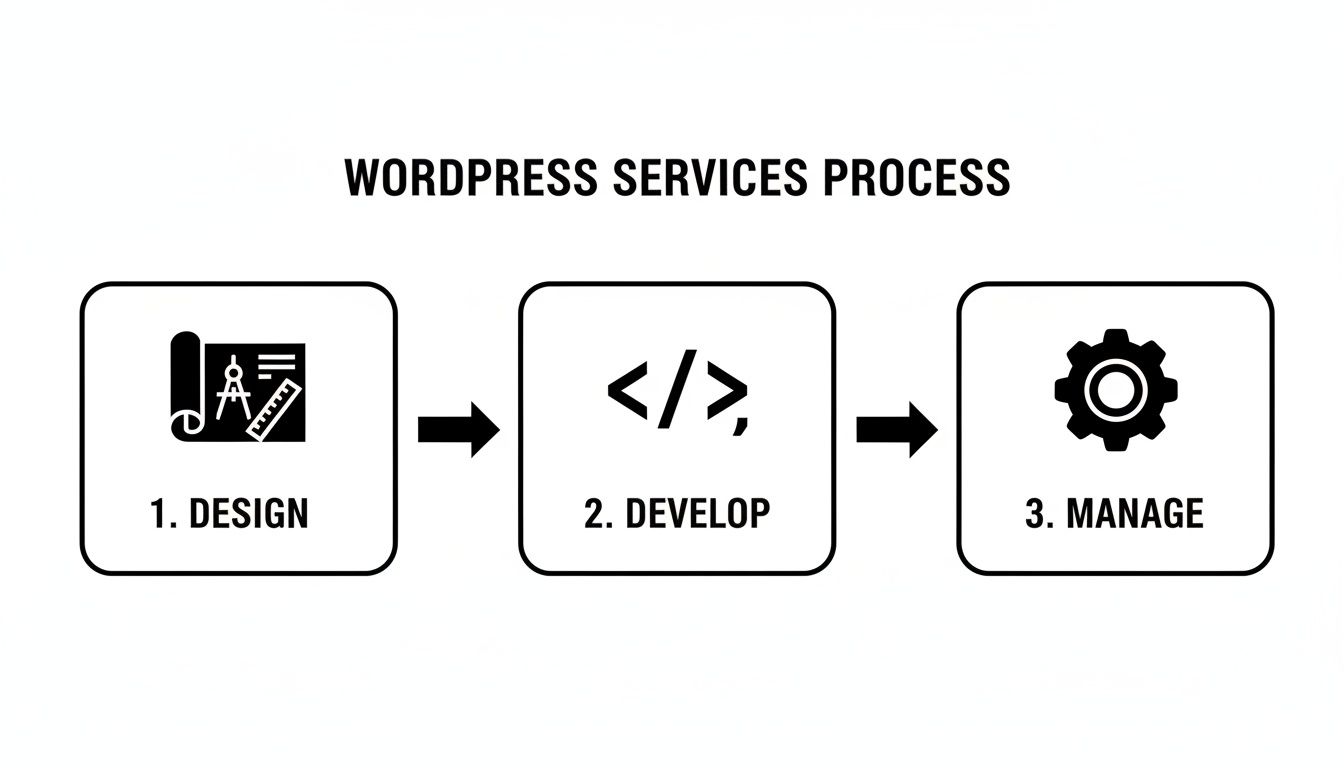
As you can see, it's a connected journey. Each stage builds on the last to deliver a polished, reliable final product that you can depend on.
Custom Themes vs Pre-Built Templates
One of the first big decisions you’ll face is whether to go for an off-the-shelf theme or invest in a custom build. It’s a bit like buying a suit. A pre-built theme is like one from the high street – it looks good and does the job for many, but the fit might not be quite right, and you’ll likely see others wearing the same one.
A custom-built theme, on the other hand, is pure Savile Row. It’s designed from the ground up just for your brand, fits your business needs like a glove, and is built without any of the unnecessary bulk.
Key Differences to Consider:
- Performance: Pre-built themes are notorious for being bloated with extra code and features you'll never touch, which can really drag your site's speed down. Custom themes are lean, containing only what’s needed for your site to function, making them significantly faster and better optimised.
- Uniqueness: With a custom theme, your website will be one of a kind. It’s an opportunity to perfectly capture your brand identity and stand out from competitors who might be using the same popular template.
- Flexibility: While pre-built themes let you tweak things, you're always working within the limits set by the original developer. A custom theme gives you complete creative freedom to build any feature or layout you can dream up.
Bespoke Plugin Development
Every now and then, your business will have a unique problem that an existing plugin just can't solve. That’s where bespoke plugin development comes into its own. It’s all about creating a brand-new plugin, from scratch, to meet a very specific need.
For instance, a UK estate agent might need a custom plugin to sync their property listings with a particular CRM. Or maybe a training company needs a unique booking system with complex scheduling rules. Instead of trying to crowbar a generic plugin into place, a custom solution delivers seamless, reliable functionality that just works.
To ensure a flawless user experience, comprehensive website quality assurance testing is a non-negotiable step. It’s how we guarantee that any custom themes or plugins work perfectly across all devices and browsers before the site goes live.
Expert WooCommerce Development
For UK businesses selling online, WooCommerce is an absolute powerhouse. But building an online store that can handle high traffic securely and convert visitors into customers requires specialist expertise. This is about creating an e-commerce experience that is both completely stable and geared for sales.
This boils down to a few critical things:
- Performance Under Load: Making sure your shop stays fast and responsive, even when you’re swamped during peak times like Black Friday.
- Secure Payment Gateways: Properly integrating trusted payment systems like Stripe and PayPal to keep your customers' data safe.
- Streamlined Checkout: Designing a checkout process that’s completely frictionless to cut down on abandoned carts – a huge issue for online retailers.
- Custom Features: Building in unique functions like product customisers, subscription models, or advanced shipping calculators that set you apart.
Seamless Website Migrations
Finally, a huge part of what we do is managing website migrations. This is the delicate art of moving your entire website—all the files, the database, everything—from an old, sluggish host to a new, high-performance UK-based server.
When handled by experts, this process is completely seamless, with zero downtime. The technical team essentially creates a clone of your site in a safe staging area, tests everything meticulously to make sure it all works, and then flips the switch to the new server during a quiet period. This ensures your customers and your search engine rankings are totally unaffected, giving your website a smooth transition to a faster, more secure home.
The Power of Managed Hosting and Performance
Once your website is built and looking sharp, its success depends on something that’s often completely overlooked: its hosting. This isn't just a bit of technical housekeeping; it's the very foundation of your online presence, dictating everything from how visitors experience your site to where you show up in Google search results.
Think of it like this: basic hosting is like renting an empty office space. You get the four walls and a roof, but that’s it. You’re on your own for security, maintenance, and making sure everything actually works. It's cheap, but it’s a lot of work.
Managed WordPress hosting, on the other hand, is the fully-serviced equivalent. You get a space that’s already optimised for peak performance, with top-tier security, expert maintenance, and all the utilities included. It’s a specialised service designed from the ground up to make WordPress websites fly. For a UK business, this isn't an expense—it's a strategic move to keep your most important digital asset in perfect health.
What Is Performance-Focused Infrastructure?
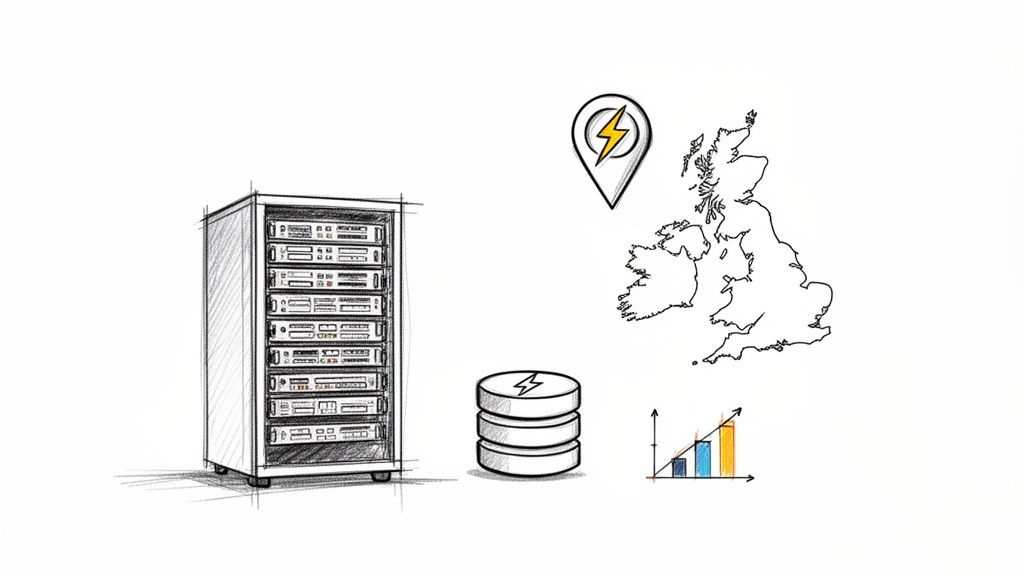
So, what does “performance-focused infrastructure” actually mean for your business? It’s not just about having a server somewhere. It’s about having the right server, in the right place, configured in precisely the right way to get your content to your customers in the blink of an eye.
This specialised setup relies on a few key ingredients working in harmony:
- UK-Based Servers: Sticking your servers in the UK drastically cuts down the physical distance your data needs to travel to reach local customers. This proximity means noticeably faster loading times for your main audience, a huge win for both user experience and your SEO efforts.
- Advanced Caching: Caching is like having a pre-made copy of your website ready to hand out instantly. Instead of your server building a page from scratch every time someone visits, a super-fast cached version is served up. Good managed hosting uses multiple layers of this—at the server, within WordPress, and even in the visitor's browser—to squeeze out every last drop of speed.
- Optimised Server Stack: This refers to the specific software running on the server itself, like PHP and the database. On a managed platform, this software is fine-tuned specifically for WordPress. It’s the difference between a generic engine and one that’s been custom-built for a high-performance race car, ensuring your site uses resources efficiently and avoids the common slowdowns you see on cheap, shared hosting.
These technical details aren’t just for show. They have a direct, measurable impact on your bottom line. A faster website keeps visitors around longer, reduces the number of people who leave immediately, and signals to Google that you offer a quality experience, helping to give your rankings a welcome boost.
Proactive Performance Tuning
One of the biggest pitfalls for unmanaged websites is a slow, creeping decline in performance. As you add more content, new plugins, and bigger images, the site gets bloated and sluggish. It happens so gradually that you might not even notice until it's become a real problem.
Proactive performance tuning, a cornerstone of managed WordPress services, is the antidote.
A significant performance gap is opening up for UK small and medium businesses. A well-optimised site can load in under a second, while a typical plugin-heavy setup often takes over four seconds—a delay that can kill conversions. This neglect is a major reason why websites fail to deliver, as they simply can’t meet modern user expectations.
Experts are constantly monitoring your site's speed and resource usage, hunting for bottlenecks and fixing them before they ever impact your visitors. This ongoing fine-tuning is what keeps your website feeling snappy and responsive, long after the excitement of launch day has worn off. To see how this is done, you can explore our detailed guide on managed WordPress hosting in the UK.
This level of dedicated care ensures your digital storefront is always performing at its best, helping your business grow instead of holding it back.
Essential Security and Maintenance for Your Site
Think of your website as a high-performance car, not a static brochure. You can’t just launch it and expect it to run perfectly forever. It needs regular check-ups and a watchful eye to keep it secure, fast, and reliable. Without a proper maintenance plan, you’re leaving your most valuable digital asset vulnerable to slowdowns, crashes, and serious security breaches.
This ongoing care is a fundamental part of professional WordPress website development services. It’s about shifting that constant responsibility from your plate onto a team of specialists. This is the difference between crossing your fingers and hoping for the best versus having a proactive strategy to protect your investment 24/7.
This isn’t just theoretical. The data paints a stark picture for UK businesses that let their websites slide. Between 2023 and 2025, the number of live WordPress sites in the UK fell by a massive 34.97%, dropping from 1,476,233 to just 959,933. That’s over half a million websites vanishing, largely due to poor maintenance, outdated software, and security holes. Incredibly, a shocking 96% of these issues came from third-party plugins. You can see more of the numbers over on mycodelesswebsite.com.
The Pillars of a Robust Maintenance Plan
A solid maintenance strategy isn't just one thing; it's a combination of essential tasks that work together to keep your site in peak condition. Think of it as your website's routine health check, performed by people who know exactly what to look for.
The absolute bedrock of good maintenance is keeping everything up to date. This isn't just about getting shiny new features—it's one of the most critical security tasks there is.
- WordPress Core Updates: The core software is always being refined to patch security vulnerabilities and boost performance.
- Plugin and Theme Updates: Developers are constantly releasing updates to fix bugs and close security gaps as they’re discovered.
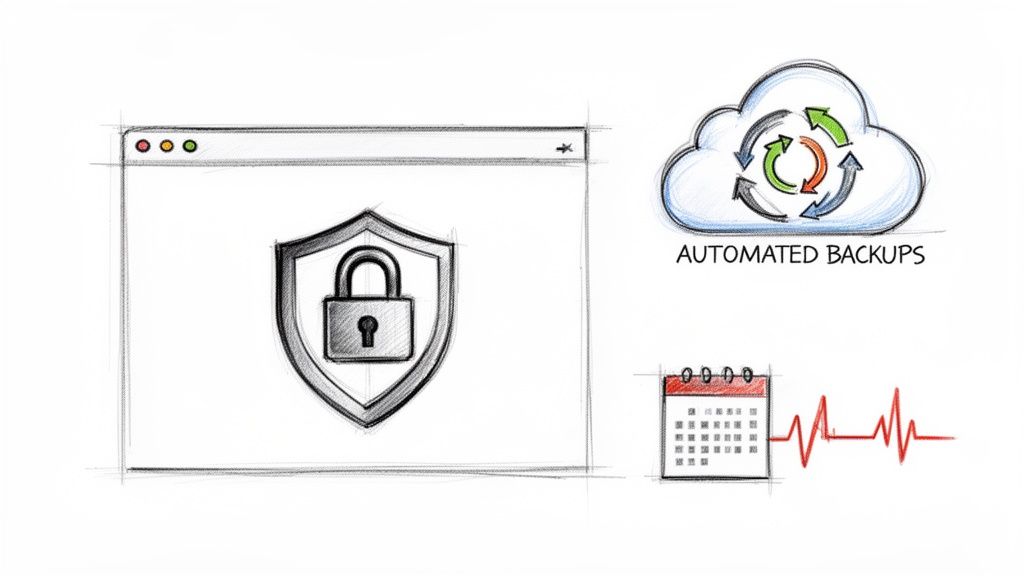
- Regular, Automated Backups: Your entire site—every file and every bit of data—should be backed up automatically to a secure, off-site location. This is your ultimate safety net, ensuring you can get back online quickly if the worst happens.
While these jobs might sound straightforward, a clumsy update can easily break your entire site. That’s why an expert team will always test updates on a safe "staging" site before ever touching your live one.
Proactive Defence Against Digital Threats
In today’s world, just having a digital fence isn’t enough. You need an active security system that hunts for and blocks threats before they can cause any damage. This is where a managed security service really proves its worth, wrapping your site in multiple layers of protection.
"A well-maintained website is a secure website. Proactive monitoring and timely updates are not optional extras; they are the foundation of a resilient online presence that protects both your business and your customers."
This always-on protection is made up of several key components that form a digital shield around your website.
Essential Security Layers:
- Web Application Firewall (WAF): This acts like a bouncer at the door, filtering out malicious traffic and blocking known attack methods before they can even get close to your site.
- Malware Scanning: Your site’s files are scanned automatically and regularly for any suspicious code or malware, which is flagged for immediate removal.
- Continuous Uptime Monitoring: Your site is checked every few minutes from locations all over the globe. If it ever goes down, your support team gets an instant alert and can jump on the problem immediately.
Handing this vital work over to a team of experts lets you get back to what you do best—running your business—without the constant low-level anxiety of a potential technical disaster. It's the peace of mind that comes from knowing your site is in safe hands. For a closer look, check out our guide on the benefits of professional WordPress website maintenance.
How to Choose the Right UK WordPress Partner
Choosing the right partner for your WordPress website development services is one of the biggest decisions you'll make for your business. You're not just hiring someone to write code; you're looking for a long-term ally who will protect and grow your most important digital asset. The right partner gets your business goals, understands the UK market, and has the technical chops to deliver a website that’s fast, secure, and reliable.
Get it wrong, though, and you could be facing missed deadlines, security holes, and a sluggish site that actively damages your brand’s reputation. To make the right call, you need to look past the slick sales pitches. It’s about digging into their portfolio, checking their technical setup, and understanding their support and pricing to find the perfect fit.
Vet Their Portfolio and Case Studies
The first thing you should do is see their work for yourself. Any agency worth its salt will be proud to show off its past projects. Don’t just glance at the pretty homepage designs—get your hands dirty.
Actually visit the websites they've built. Do they load in a snap? Is it easy to find what you're looking for? And how do they look on your phone? This kind of hands-on test tells you far more than a glossy brochure ever will.
Next, look for proper case studies. These should walk you through the client's original problem, what the agency did to solve it, and—crucially—the results. Keep an eye out for real, measurable outcomes, like a jump in traffic, better conversion rates, or faster page load times.
Scrutinise Their Technical Infrastructure
The technology running behind the scenes is what dictates your site’s performance and security. For any UK business, the first question is simple: where are the servers? Using UK-based servers isn't just a nice-to-have; it's essential for giving your local customers a speedy experience.
Beyond location, you need to ask about their security measures. Do they provide a Web Application Firewall (WAF), regular malware scanning with tools like Imunify360, and proactive monitoring as standard? These aren't optional extras; they're your website's first line of defence.
The United Kingdom is a major hub for WordPress, accounting for 4.05% of all sites globally. With around 959,933 live UK sites, its popularity is clear, and a recent 18% increase in mobile-first development shows just how vital speed and solid security are. You can find more WordPress insights on sqmagazine.co.uk.
Assess Their Support and Communication
When your website hits a snag, you need to know that help is just a call or a click away. Make sure you understand what a provider’s support system really looks like. What does "24/7 support" actually mean—a real person you can talk to at 3 a.m., or just an automated ticketing system?
A great partner communicates clearly and is upfront about how they work. Pay close attention during your first few chats. Are they quick to respond? Do they know their stuff? Do they seem genuinely interested in what your business needs? These early signs are often a good predictor of the service you'll get down the line.
"A true WordPress partner doesn't just build your site; they invest in its success. Their support structure and communication style are direct reflections of their commitment to your business's long-term health."
Look for a provider that offers different levels of support, maybe with a set amount of time each month for updates and tweaks. It shows they’re set up for proactive, ongoing care, which is exactly what a successful partnership is all about. For more information on what this entails, you can read about our approach to WordPress website design services.
Understand Pricing and Service Tiers
Finally, you need a plan that fits your budget and your business goals. Most managed WordPress providers use a tiered pricing model, so it’s important to get to grips with what you get at each level. Don't just compare the price tags; compare the value you’re getting for your money.
A cheaper plan might look tempting at first, but it could be missing essentials like daily backups, advanced security scanning, or enough monthly support time. Before you decide, make a checklist of your absolute must-haves and see how each provider's plans stack up.
Comparing WordPress Service Plans for UK Businesses
Choosing the right plan is about matching features to your current needs while leaving room to grow. Here’s a look at what you can typically expect from different service tiers to help you decide.
| Feature | Starter Plan (e.g., Single Site) | Professional Plan (e.g., Growing Business) | Premium Plan (e.g., E-commerce/Multi-site) |
|---|---|---|---|
| Ideal For | Blogs, portfolios, small local businesses | Growing businesses, lead-generation sites, active content creators | E-commerce stores, membership sites, multi-site networks |
| Core Updates | WordPress, themes, and plugins updated regularly | All core updates, plus proactive security patching | All updates, plus staging environment for testing before going live |
| Backups | Daily automated backups with 30-day retention | Daily backups, plus on-demand backups and easy 1-click restore | Multiple daily backups, real-time cloud backups for WooCommerce data |
| Security | Basic malware scanning and firewall | Advanced WAF, proactive malware removal, and DDoS protection | Comprehensive security suite, vulnerability scanning, and dedicated support |
| Performance | UK-based hosting, basic caching | CDN integration, image optimisation, and server-level caching | Premium CDN, dedicated resources, and performance monitoring/audits |
| Monthly Support Time | Up to 1 hour for minor tweaks and content updates | 2-4 hours for development tasks, content changes, and consultation | 5+ hours, priority support, and strategic planning sessions |
| Typical Monthly Cost | £50 – £150 | £150 – £400 | £400+ |
Whether you're just starting out with a simple blog or running a complex online shop, there’s a plan that fits. The key is to find one that gives you the resources you need today and a clear path to scale up when you're ready.
Got Questions About WordPress Development? We've Got Answers
Stepping into the world of professional WordPress development services can feel like a big move, and it's only natural to have a few questions. You're not just buying a service; you're making a smart investment in your business's future, and you want to get it right. This section tackles the most common queries we hear from UK business owners, with clear, straightforward answers to help you move forward confidently.
We’ll cover everything from costs and timelines to the crucial differences between the types of WordPress out there. Think of this as your final checklist before partnering with an expert.
So, How Much Do WordPress Development Services Cost in the UK?
There’s no one-size-fits-all price tag for a professional WordPress site, simply because every project is different. The cost really boils down to the complexity of what you need. A sleek, simple brochure site for a local tradesperson will have a different budget than a sprawling e-commerce store with custom WooCommerce features and multiple integrations.
The best way to think about it is as an investment in your site's performance, security, and future-proofing. For ongoing care, most providers offer managed service plans as monthly subscriptions.
- Starter Plans: These usually sit in the £50 to £150 per month range. They’re a perfect fit for a single blog, portfolio, or small business site that needs the essentials looked after, like updates and security.
- Professional Plans: Aimed at growing businesses or sites with more traffic, these often cost between £150 and £400+ per month. You'll typically get more support time, beefed-up security, and proactive performance tweaks.
- Custom Projects: A full website build from scratch or a major redesign is always quoted on a project-by-project basis. The final figure depends entirely on the scope of work.
Can I Not Just Manage My WordPress Site Myself?
You absolutely can, but the real question is, should you? Going the DIY route means you become the full-time, on-call IT department. You're suddenly responsible for running every single update for WordPress core, themes, and plugins. You'll also need to perform regular security scans, create and test backups, and constantly fine-tune the site for speed.
For most business owners, the hours spent wrestling with technical chores are hours stolen from what really matters—sales, marketing, and looking after your customers.
Handing over the technical heavy lifting to a managed service provider isn't just about convenience; it’s a strategic move. It frees you up to focus on what you do best—running your business—with the priceless peace of mind that an expert has your back.
What’s the Difference Between WordPress.com and WordPress.org?
This is a classic point of confusion, but the distinction is absolutely vital for any serious business. The easiest way to think about it is like renting a furnished flat versus building your own house.
WordPress.com is a commercial, all-in-one platform. It's incredibly easy to get started, but that ease comes at a cost: major limitations on flexibility, customisation, and control. You’re playing in someone else's sandbox, with their rules.
WordPress.org, however, is the free, open-source software you download and install on your own web hosting. This is the version that gives you total freedom and 100% ownership. You can install any theme or plugin you can find and tweak the code to your heart's content. Professional WordPress development services work almost exclusively with WordPress.org sites because they offer the power and scalability that ambitious businesses need to grow.
How Long Does a Professional WordPress Site Migration Take?
Moving your website to a new host sounds like a massive headache, but with an experienced team, it’s a surprisingly quick and painless process. For a standard website, the whole thing is usually wrapped up within 24 to 72 hours. The exact timeline just depends on how big and complex your site is.
A good provider will manage the entire transfer meticulously. They handle moving all the website files and the database, then get everything reconfigured on the new server. Most importantly, they test everything thoroughly on a private staging site before flipping the switch.
The goal is always a zero-downtime migration. This means your visitors and customers won't notice a thing, ensuring your business continues to run without a single hiccup.
Ready to ensure your website is fast, secure, and always in expert hands? Vivihosting provides complete WordPress care, from high-performance UK hosting to proactive maintenance and support, so you can focus on your business. Explore our managed WordPress plans today and build a powerful foundation for your digital growth. Learn more at https://vivihosting.com.