

It’s easy to get website hosting and maintenance mixed up, but they are two very different, yet equally vital, parts of keeping your website online and healthy. Think of it this way: hosting is the plot of land your website lives on, while maintenance is the constant upkeep that keeps the building secure, fast, and running perfectly.
If you skimp on either, you're building a fantastic shop on a shaky foundation. Sooner or later, you're going to run into trouble.
The Foundation of Your Digital Presence
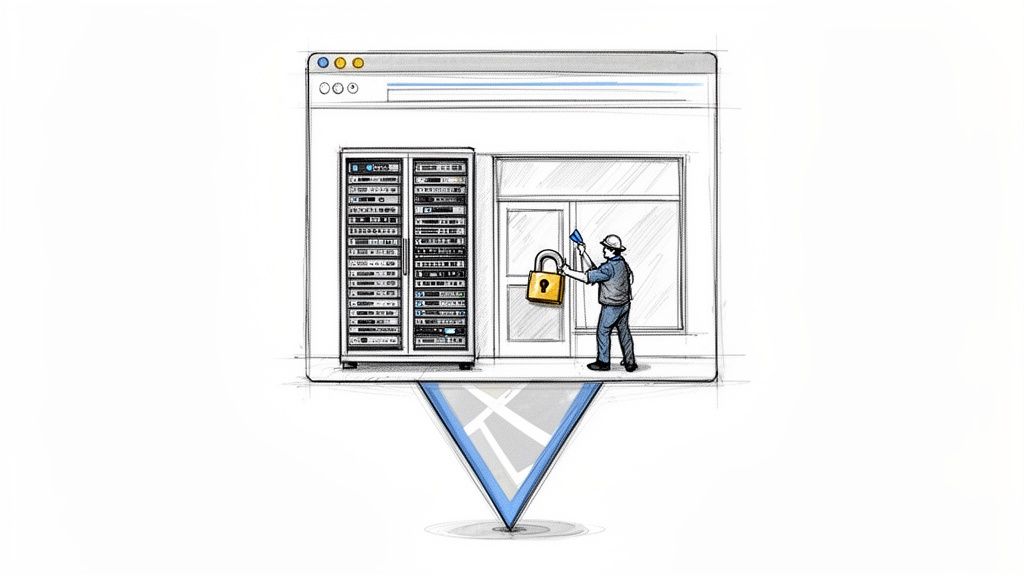
Let's stick with the high-street shop analogy for a moment. To even exist, your shop needs a physical address, a space on the street. That's your website hosting. It's the slice of digital real estate you rent on a server where all your website’s files, code, and images are stored. Without it, your website simply has no address for anyone to visit.
Of course, just renting the space doesn’t guarantee a successful business. That’s where website maintenance steps in. Maintenance is all the behind-the-scenes work required to keep your shop in top condition—it’s the equivalent of regularly cleaning the windows, checking the alarm system is working, refreshing your stock, and making sure the front door opens without a hitch for every single customer.
Why This Distinction Matters for UK Businesses
For a small or medium-sized business here in the UK, getting your head around this is critical. It's incredibly tempting to just find the cheapest hosting plan you can to get your site online, but that completely ignores the essential work needed to keep it running properly. A website left to its own devices quickly becomes more of a liability than an asset.
In today's market, your website is your 24/7 storefront. Getting both hosting and maintenance right ensures it’s not just open for business, but also safe, welcoming, and set up to turn visitors into paying customers.
This dual approach is what protects your investment and makes sure it actually delivers a return. A fast, secure, and reliable website is fundamental to building trust with your audience, which is the cornerstone of growth.
The Two Sides of a Successful Website
At the end of the day, top-tier hosting and diligent maintenance are two sides of the same coin. They must work in tandem to create the professional, seamless experience your customers expect.
Here’s a simple breakdown of how they support each other:
- Hosting provides the power and speed. A quality UK-based server means your pages load in a snap for local customers, creating that all-important great first impression.
- Maintenance keeps things running smoothly. Regular software updates, security scans, and daily backups prevent technical glitches, protect your customers' data, and keep your site online.
- Hosting offers a stable environment. It’s the solid, secure foundation that your entire digital operation is built on.
- Maintenance adapts to new threats and technologies. It keeps your website’s software up-to-date, patching security holes before hackers can find them.
For any UK business serious about succeeding online, investing in a plan that combines robust website hosting and maintenance isn't just a tech expense. It’s a core business decision that protects your reputation and your bottom line.
What a Managed Plan Actually Delivers
So, what do you really get when you sign up for a managed website hosting and maintenance plan? Let’s cut through the jargon. Think of it like hiring a dedicated property manager for your digital shop. Instead of you having to worry about fixing leaky pipes, checking the security cameras, or giving the walls a fresh coat of paint, an expert team handles everything behind the scenes. This frees you up to do what you do best: run your business and look after your customers.
A good managed plan bundles all these essential, ongoing tasks into one predictable monthly cost. This approach takes the guesswork out of website ownership and protects you from sudden, eye-watering repair bills if something goes wrong. It’s about being proactive, not reactive—solving problems before they have a chance to affect your sales or reputation.
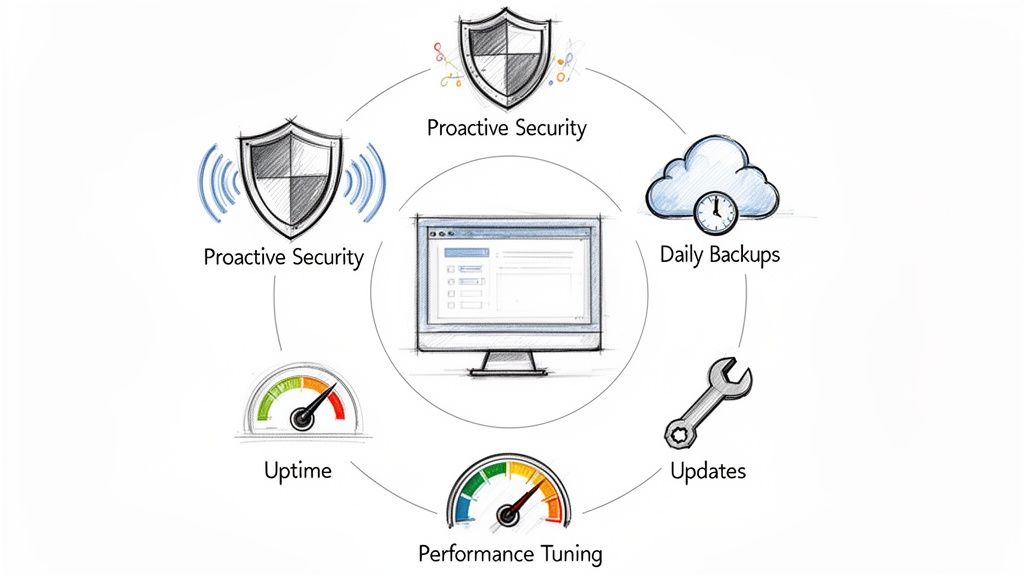
To put it in perspective, let’s look at what's typically included. The table below breaks down the core services you should expect from any quality managed hosting and maintenance package.
Core Services in a Managed Hosting & Maintenance Plan
| Service Component | What It Does | Why It Matters for Your UK Business |
|---|---|---|
| Proactive Security | Implements firewalls, runs malware scans, and actively blocks threats. | Protects your customer data and your reputation from hackers, which is crucial for building trust. |
| Daily Backups | Creates a complete copy of your website every day and stores it securely off-site. | Provides an essential safety net, allowing for a quick recovery from any disaster. |
| Uptime Monitoring | Constantly checks your site to make sure it’s online and accessible to visitors. | Ensures your ‘digital doors’ are always open for business, preventing lost sales. |
| Performance Tuning | Optimises your server, caching, and other elements to make your site load faster. | A faster site improves user experience, boosts your Google rankings, and increases conversions. |
| Software Updates | Safely updates your core software (like WordPress), plugins, and themes. | Closes security holes and keeps your site running smoothly on the latest, most secure technology. |
| Expert Support | Gives you direct access to a technical team for help, advice, and troubleshooting. | Saves you hours of frustration by providing quick solutions from people who know what they’re doing. |
These services work together to create a stable, secure, and fast platform for your business. It's not just a list of features; it's a comprehensive strategy for digital peace of mind.
Your Digital Bodyguard: Proactive Security
One of the biggest jobs of a managed plan is providing serious, proactive security. We're not just talking about reacting to a problem after it’s happened; we’re talking about stopping threats in their tracks.
Your provider will set up a multi-layered defence. This usually starts with a Web Application Firewall (WAF), which acts like a bouncer at the door of your website. It inspects everyone trying to get in and turns away any suspicious traffic before it can cause any trouble.
Many plans also use specialised tools to perform regular malware scans, constantly hunting for and neutralising any malicious code that might have slipped through. This constant vigilance is what protects your business data, your customers’ private information, and your hard-earned reputation.
Your Digital Insurance Policy: Daily Backups
Imagine this for a second: you wake up one morning and your website has vanished. It’s been hacked, corrupted by a bad update, or accidentally deleted. For most businesses, that would be a complete catastrophe. This is where a managed plan’s safety net comes in—automated, daily backups.
And these aren't just occasional snapshots. A quality provider will back up your entire website—all the files, the database, everything—at least once a day. These copies are then whisked away and stored securely off-site, far away from your live server.
It means that if the worst should happen, your entire digital presence can be restored quickly and painlessly. It’s the ultimate insurance policy, giving you the confidence to know your business can bounce back from just about anything.
Keeping the Lights On: Uptime Monitoring and Performance Tuning
A website that's offline is no different from a shop with the shutters down. Uptime monitoring is a simple but vital service where an automated system 'pings' your website every few minutes to make sure it’s online and responding.
If it detects even a hint of a problem, it instantly alerts the technical team. They can then jump in and fix the issue, often before you or your customers even realise there was a blip.
But just being online isn't enough; your site has to be fast. Slow-loading pages bleed customers and kill conversions. Performance tuning is all about wringing every last drop of speed out of your website. This involves:
- Smart Caching: Storing ready-made copies of your pages so they can be served up to visitors almost instantly.
- Server Optimisation: Fine-tuning the server's settings so they are perfectly matched to your website's needs (especially important for platforms like WordPress).
- Content Delivery Network (CDN): Spreading copies of your site's assets across a global network of servers, making it load faster for visitors no matter where they are in the world.
Keeping the Engine Tuned: Core and Plugin Updates
The software that runs your website—whether it’s WordPress itself or the various plugins and themes you use—is constantly being updated. These updates aren't just about adding shiny new features; more often than not, they contain critical patches for security holes.
Trying to manage these updates yourself can be a real headache. A single faulty update can easily break your entire site. A managed plan takes this risk and hassle off your plate. The technical team will test all updates in a safe, separate environment before applying them to your live site, ensuring everything plays nicely together. This careful approach to updates is a cornerstone of great website maintenance. If you'd like to see how we handle this, you can read more about our specific managed website services.
Why UK-Based Hosting Gives You a Competitive Edge
When you're looking for a company to handle your website hosting and maintenance, it’s easy to think the physical location of their servers is just a minor technical detail. In reality, it’s one of the smartest strategic moves you can make. Choosing a UK-based provider isn’t just about flying the flag; it’s a direct investment in your site's performance, search engine ranking, and legal standing.
For your customers here in the UK, the difference is night and day. The closer they are to the server holding your website's files, the quicker your pages load on their screen. It's simple physics, really—the data has less ground to cover. This reduction in travel time, known as latency, can shave vital milliseconds off your load times.
That might not sound like a lot, but a small speed boost has a huge ripple effect. Faster websites feel better to use, which means people stick around longer, bounce less, and are far more likely to buy something. A UK server gives your local audience the slick, professional experience they expect.
Supercharge Your Local SEO Performance
Beyond keeping your visitors happy, hosting your website in the UK sends a massive signal to search engines like Google.co.uk. When Google detects that your site is served from a UK IP address, it correctly deduces that your business is geared towards a UK audience. This geographical clue is a powerful ranking factor for local searches.
Think of it as giving Google a helpful nudge. If you're a plumber in Manchester or an online shop based in Bristol, you absolutely want to show up when people in those areas are searching. Hosting locally cements your connection to the UK market, helping you climb the rankings for those all-important local searches and putting you right in front of the customers who matter most.
By matching your server location to your target audience, you're not just getting a speed boost. You're laying a stronger foundation for your local SEO, making it much easier for nearby customers to find you instead of the competition.
This one technical choice can give you a real, tangible edge over competitors who might be using cheaper overseas hosting, completely unaware of the damage it's doing to their local visibility.
Get Support When You Actually Need It
Have you ever had to deal with urgent tech support from a company on the other side of the world? It’s a uniquely frustrating experience, waiting hours for a reply while your business is offline. When your website has a problem, you need help now, not eight hours from now.
Working with a UK-based team means their support staff are on your clock. During UK business hours, you can get a real person on the phone who understands your market and can get to work on your problem straight away. This kind of localised support is priceless, turning a potential disaster into a minor hiccup and giving you genuine peace of mind.
The UK's Data Processing & Hosting Services industry is a bustling space. By 2025, it was home to 3,391 businesses, generating revenues of £10.7 billion. With so much competition, it’s more important than ever for small businesses to pick a partner that offers hands-on, local management. You're not just a ticket number in a global queue; you're a local client who deserves prompt, effective help. If you're interested in the market, you can discover more insights about the UK data industry on ibisworld.com.
Navigate Data Compliance with Confidence
Finally, and this is a big one, hosting in the UK helps ensure your website and customer data are handled according to UK law. Since Brexit, we have our own version of the GDPR—the UK GDPR. Keeping your data on UK soil is the simplest way to stay compliant and meet strict data sovereignty rules.
This means your customers’ personal information remains within the UK’s legal jurisdiction, protected by laws they understand and trust. For any business that collects data, whether through a simple contact form or a full-blown WooCommerce store, this is non-negotiable. It shows you’re serious about security, builds trust with your audience, and protects you from the risk of hefty legal and financial penalties.
How to Choose the Right Plan for Your Business
Trying to pick a managed website hosting and maintenance plan can feel a lot like staring at a coffee shop menu with a hundred different options. Every provider has their own names for their packages—'Growth', 'Pro', 'Business'—which makes a straight comparison feel almost impossible.
The trick is to ignore the marketing jargon. Instead, focus on matching the core features of a plan to the real-world needs of your business. A startup blogger with a simple portfolio just doesn't have the same demands as a busy WooCommerce store that's processing hundreds of orders a day. The right plan for you will hit that sweet spot between performance, security, and cost, giving you everything you need to grow without paying for extras you'll never touch.
Start With Your Business Reality
Before you even glance at a pricing page, take a minute for an honest assessment of your own business. Getting clear on your current situation and where you want to go is the single most important step you can take. A good provider will help guide you, but you need to know your own starting point.
Ask yourself these key questions:
- What's my website's main job? Is it a simple online brochure, a blog for building authority, a lead-generation machine, or a full-blown online shop?
- How much traffic am I actually getting? Be realistic. Are we talking a few hundred visitors a month, or tens of thousands?
- How bad is it if my site goes down? If your website is offline for an hour, is it a minor headache or a major loss of sales and trust?
- How much of the technical stuff can I (or do I want to) handle myself? Are you looking for a completely hands-off service, or are you happy to do some minor tweaks?
Your answers will immediately start to filter out plans that are either overkill or not powerful enough for you. It’s the fastest way to save both time and money.
Decoding the Plan Tiers
Most managed hosts group their plans into tiers, usually with names like 'Starter', 'Professional', and 'Premium' (or 'Agency'). While the labels change, the resources and services included tend to follow a predictable upward path.
Think of it this way: your goal is to find the tier where the services properly match your business's value and risk. An e-commerce site absolutely needs the beefed-up security and daily backups of a higher-tier plan, because the cost of something going wrong is just so much higher.
This flowchart helps to visualise how the benefits of UK-based hosting align with the priorities of a local business.
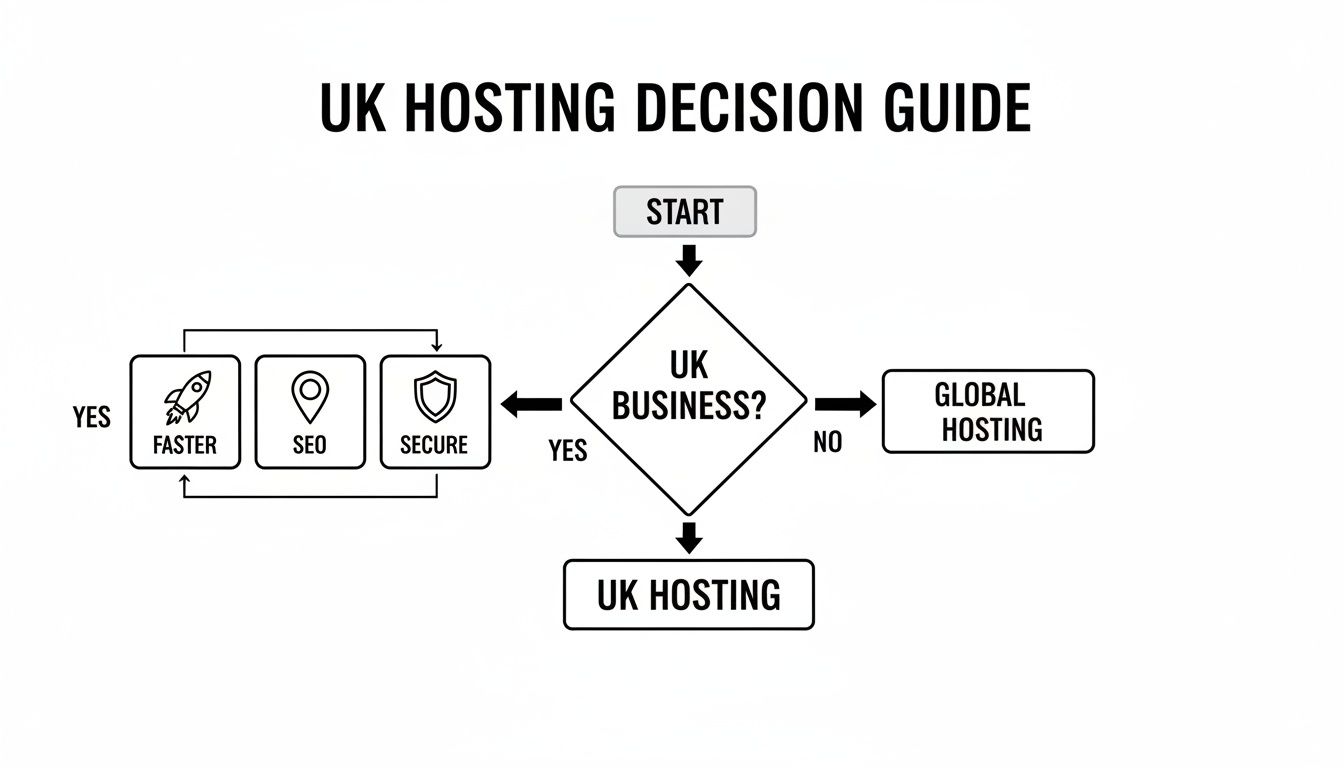
As the decision tree shows, choosing a local, UK-based host is the best starting point for any UK business looking for better speed, SEO, and security.
A Framework for Comparing Plans
To make a smart choice, you've got to compare apples with apples. The table below gives you a simple checklist to use when you're looking at different providers and their plans. By focusing on these core elements, you can see the real value behind the price tag.
Which Managed Plan Fits Your Business Needs?
Use this framework to see where your business fits. It cuts through the marketing noise and gets straight to the features that matter.
| Business Profile | Starter Plan (Ideal For) | Professional Plan (Ideal For) | Premium/Agency Plan (Ideal For) |
|---|---|---|---|
| Who It's For | New businesses, bloggers, or simple portfolio sites with low traffic. | Established small businesses, lead-generation sites, and small e-commerce stores. | High-traffic e-commerce stores, agencies managing client sites, and complex web applications. |
| Backup Frequency | Typically weekly or monthly backups are standard. | Daily backups are crucial, offering a much more recent restore point if needed. | Daily backups are essential, often with on-demand options and longer retention periods. |
| Security Level | Includes fundamental protection like a basic firewall and malware scanning. | Offers advanced security, including proactive threat detection and more robust firewall rules. | Provides enterprise-grade security with dedicated resources and priority malware removal. |
| Support Time | May include limited email support or a small amount of dedicated time per month. | Offers priority support and a generous allocation of monthly time for updates and fixes. | Features dedicated account management and significant support hours for complex tasks. |
| Performance | Solid performance on a shared server, perfectly adequate for lower traffic volumes. | Enhanced performance with more server resources and advanced caching for faster load times. | Top-tier performance with dedicated resources, ensuring speed even during traffic spikes. |
When you look at plans through this lens, the right choice for your business becomes much clearer. You stop just looking at the price and start evaluating how well the service can support your operations and protect your revenue. It turns a simple expense into a strategic investment in your online presence.
To see how these features are often bundled together, you can explore various website maintenance packages for a more detailed breakdown.
The True Cost of Neglecting Your Website
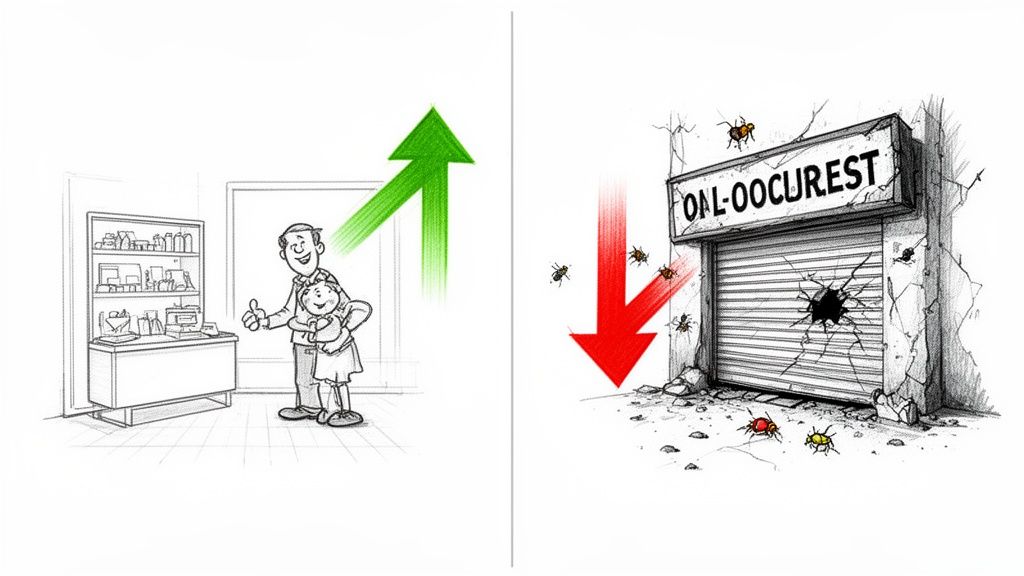
For many small business owners, website maintenance feels like an optional extra—a line item on the budget that can be easily trimmed when things are tight. But this way of thinking is a dangerous trap. Ignoring your website’s upkeep isn’t a saving; it’s more like accumulating debt. Sooner or later, that debt comes due, often with a much higher price tag in the form of lost sales, emergency repair bills, and a damaged reputation.
Thinking of your website as a one-and-done project is the biggest mistake you can make. It's a living, breathing part of your business, operating in an online world that’s constantly changing. New security threats pop up daily, software needs constant patching, and your customers' expectations for a fast, smooth experience only ever go up. Leaving it to fend for itself is like never servicing your company van; it might run for a while, but a breakdown is inevitable—and it will almost certainly happen at the worst possible moment.
The Fallout from a Security Breach
Just picture it: a hacker finds a loophole in your unpatched website and gets in. The immediate costs are obvious—you'll be paying an expert thousands of pounds to clean up the mess. But the hidden costs are where the real damage lies.
A security breach shatters the trust you’ve worked so hard to build. Customers whose data has been stolen aren't likely to come back, and bad news travels fast through online reviews. You could even find your site blacklisted by Google, making you invisible to new customers searching for what you offer. This is where proactive website hosting and maintenance becomes your first and best line of defence.
The Financial Drain of Poor Performance
Slow-loading pages are silent conversion killers. Every extra second a potential customer waits for your site to load is another chance for them to give up and head straight to a competitor. This isn't just a minor frustration; it's a direct hit to your wallet.
Think about a busy sales period like Black Friday. If your website slows to a crawl because it hasn’t been optimised to handle the traffic, you could lose thousands in sales in just a few hours.
A slow, buggy, or insecure website actively works against your business goals. It frustrates users, damages credibility, and directly impacts your bottom line. Proactive maintenance is not an expense; it's an investment in stability and growth.
This is precisely where managed services prove their worth. In 2025, the UK's market for Data Processing, Hosting, and Website Operating hit a staggering £259.7 billion, a number that shows just how much economic activity relies on solid digital infrastructure. For UK businesses, this highlights the value of partnering with providers who offer UK-based servers optimised for both speed and security. You can find more data on the UK’s growing hosting market on ibisworld.com.
The Domino Effect of Downtime
Unexpected downtime is more than just an inconvenience; it brings your entire digital operation to a grinding halt. It could be a server crash, a dodgy plugin update, or a malicious attack, but the result is always the same: your virtual front door is slammed shut.
Every minute your site is offline, you're losing money. Beyond the immediate loss of sales, downtime creates a ripple effect:
- Customer Frustration: Visitors hitting an error page will quickly lose confidence in your business.
- Wasted Marketing Spend: All that money you spent on Google or Facebook ads? It's going down the drain, sending people to a dead end.
- Operational Disruption: Even your own team might be blocked from accessing crucial information they need to do their jobs.
Ultimately, gambling with website hosting and maintenance is a risk no serious business can afford to take. The money you think you’re saving is just an illusion, easily wiped out by the real-world costs of a data breach, lost revenue, and irreversible damage to your brand. Investing in a professional maintenance plan isn't about fixing a problem that might happen; it’s about protecting your most valuable digital asset and making sure it continues to drive your business forward.
Your Questions About Hosting and Maintenance Answered
Handing over the keys to your website is a big decision, so it's only natural to have a few questions. You're entrusting a vital part of your business to someone else, and you need to feel confident about it. Let's walk through some of the most common queries we hear from UK business owners, clearing up any confusion.
We'll get straight to the point, covering everything from whether you could just do it all yourself to what the real difference is between that super-cheap hosting deal and a proper managed service.
Can I Just Handle Website Maintenance Myself?
In theory, yes, you absolutely can. But it’s a bit like deciding to do your own business accounting instead of hiring an accountant. While it's possible, it demands a specific set of tools, a deep well of technical knowledge, and a serious time commitment to keep up with constant software updates and emerging security threats.
Put it this way: your genius lies in running your business—looking after customers and growing your brand. Our expertise is in keeping websites secure, fast, and always online. Going the DIY route means pulling your focus away from what you do best to learn a new, complex, and ever-changing discipline. A managed plan lets you hand that work over to an expert, freeing you up completely.
Why Pay for Maintenance if My Site Seems to Be Working Fine?
This is a fair and common question. On the surface, your website might look perfectly healthy, but behind the scenes, small vulnerabilities can be piling up without you even knowing. Think of maintenance as preventative care, not just an emergency service.
You don't wait for a cavity to start brushing your teeth, and the same logic applies to your website. Maintenance ensures your digital health by patching security holes before they're exploited and optimising performance before it starts to slow down.
A site that "works fine" today could be just one outdated plugin away from a major security breach or a complete crash. Investing in ongoing maintenance is about guaranteeing long-term stability and having a solid disaster recovery plan ready for any digital dramas. It's an investment in resilience.
Is It Hard to Move My Website to a New Host?
The thought of a complicated and risky website move is what stops many businesses from upgrading their hosting. And it's a valid worry—if a migration goes wrong, it can lead to broken pages, lost data, and frustrating downtime. With a quality managed provider, however, the whole process is designed to be smooth and stress-free.
A professional team will usually handle the entire migration for you. Here’s how it typically works:
- First, they create a complete backup of your current site, including every file and the database.
- Next, they set up a new, optimised hosting environment on their UK-based servers.
- They then carefully move and test your website in its new home to make sure everything works perfectly.
- Finally, they flip the switch at a time chosen to cause minimal disruption, often resulting in zero downtime for your visitors.
For you, the whole thing is hands-off. The technical headaches are gone, making the switch to a faster, more secure home for your website surprisingly simple.
What Is the Real Difference Between Shared and Managed Hosting?
This question really gets to the heart of what you're paying for. The difference is huge, and an analogy helps make it clear.
Shared hosting is like renting a room in a crowded student flat. It’s cheap, but you’re sharing absolutely everything—the kitchen, the bathroom, the internet connection. If one of your flatmates decides to throw a massive party (or their website gets a sudden surge in traffic), it slows things down for everyone. Security can be a bit dodgy, too.
Managed WordPress hosting, on the other hand, is like having your own serviced apartment. It’s built just for you, comes with a dedicated concierge for security and maintenance, and offers a premium, reliable experience. You’re not just renting space; you're investing in performance, expert support, and complete peace of mind. Taking a look at dedicated WordPress website support services can give you a much clearer picture of the specialised care involved.
Ready to stop worrying about your website and start focusing on your business? At Vivihosting, we provide performance-focused, UK-based managed hosting and maintenance designed for ambitious businesses. Let our expert team take care of the technical details so you can get back to what matters most. Learn more about our managed plans at vivihosting.com.