


A bespoke website is, quite simply, a website built from the ground up for one specific business. It’s not based on a pre-made template or a theme that thousands of other people are using. Think of it like a Savile Row suit versus one from a high-street shop. The off-the-rack suit does the job, but the tailored one is crafted to fit you perfectly, reflecting your personal style and needs. That’s what a bespoke site does for your brand.
What Does Bespoke Really Mean for a Website?
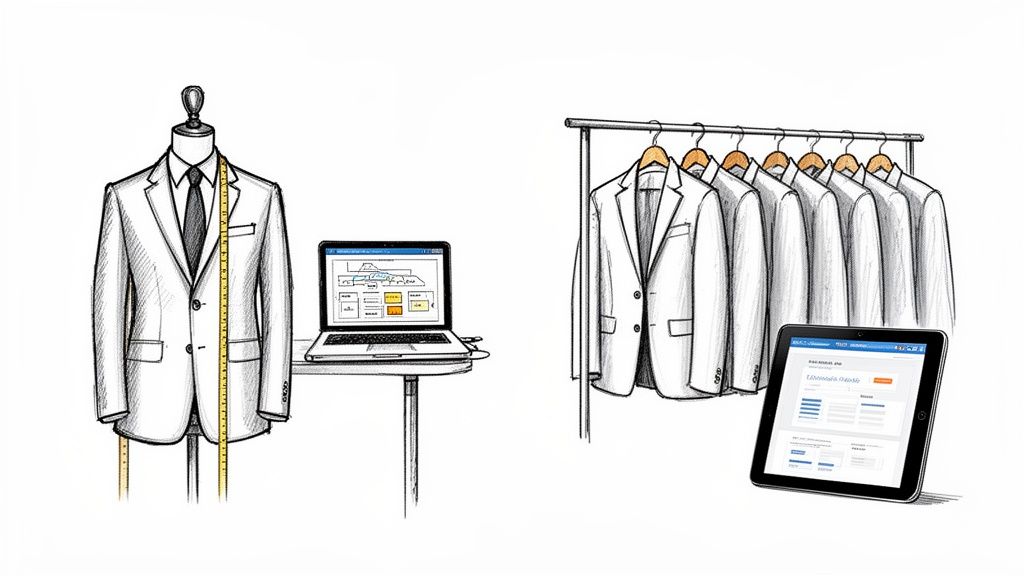
Let's cut through the buzzwords. A website built from a template is a bit like a Swiss Army knife – it has lots of tools, but you'll probably only use a few of them. All that extra, unused code and generic design can weigh it down, making it slower and harder to adapt as your business grows.
A bespoke website, on the other hand, is a precision tool. Every single part of it, from how a customer navigates through your services to the specific functions in the admin area, is designed and built with a purpose. It's constructed around your business goals, not the other way around.
Starting With a Blank Page
The biggest difference is the starting point. With a template, you're trying to fit your brand into a pre-existing box. With a bespoke build, you and the developers start with a completely blank canvas.
This collaborative process means your website becomes a genuine digital extension of your brand, not just a generic online brochure.
Here’s what that looks like in practice:
- Totally Unique Design: The look and feel aren’t chosen from a catalogue. They're created from scratch to match your brand’s personality and truly resonate with your ideal customers.
- Purpose-Built Features: Need a complex quoting tool, a unique member's area, or a specific integration with your stock system? The functionality is built to solve your exact problems.
- Lean and Fast Code: There's no bloat. The code is clean and efficient because it only contains what your website needs to run. This translates directly to faster loading speeds and a much better experience for your visitors.
Of course, this level of custom work is an investment. For small and medium-sized UK businesses, a bespoke website can range anywhere from £3,000 to over £10,000, all depending on its complexity and the features required.
A bespoke website isn't just a different technical approach; it's a different business strategy. You're investing in a platform designed to grow alongside your ambitions, giving you a competitive edge that a template simply can’t offer.
In the end, going bespoke means you're choosing long-term performance and a perfect brand fit over a quick, cheap fix. If you want to get up to speed with more of the language used in web development, our complete web design glossary is a great place to start.
Comparing Bespoke and Off-the-Shelf Websites
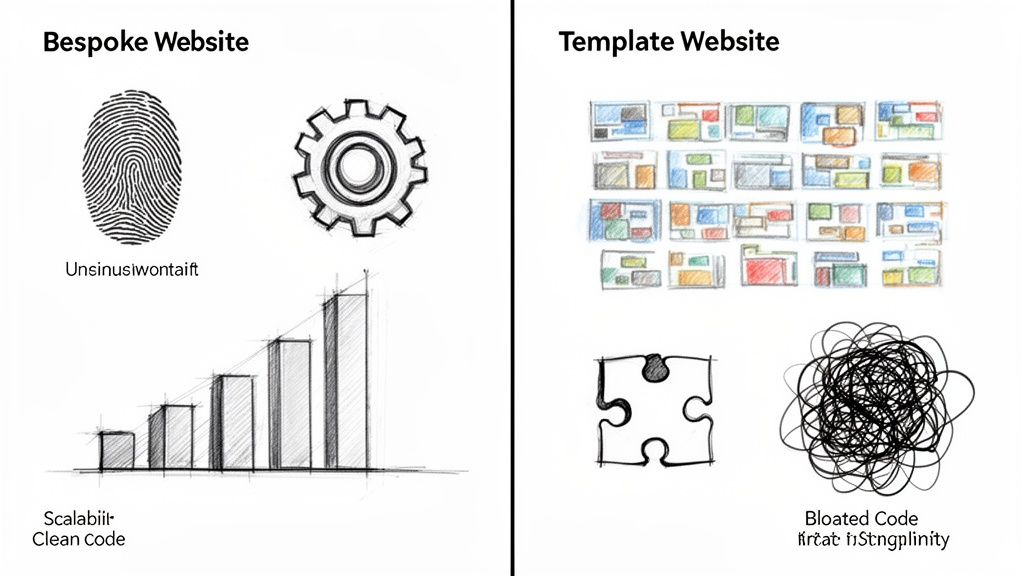
Deciding between a bespoke website and an off-the-shelf template is one of the most important calls a growing business can make. They both get you online, sure, but they are worlds apart in four key areas that have a massive impact on your brand, your day-to-day operations, and where your business is heading. The thinking here is very similar to weighing up custom software vs off-the-shelf solutions for any other part of your company.
Let's dig into the practical differences you'll actually feel.
Design and Brand Uniqueness
An off-the-shelf template is like trying on a suit from a department store – you have to fit into its shape. You can swap the colour and pin a logo on it, but the fundamental cut and style are fixed. Thousands of other websites are wearing the exact same suit, making it nearly impossible for your brand to stand out and be remembered.
A bespoke design, on the other hand, is like getting that suit tailor-made. It starts with your brand's measurements. The entire experience, from how a user navigates the site to the smallest interaction, is crafted to tell your unique story. It feels like an authentic extension of your business, not just another website running a popular theme.
Functionality and Custom Features
Template websites get their functionality from a vast library of plugins. This is fine for basic needs, but what happens when you need something that doesn’t come in a box? Maybe you need a unique checkout flow for your WooCommerce store to tackle cart abandonment, or an integration with a very specific piece of inventory software.
With a template, you end up trying to patch together multiple plugins that weren't designed to cooperate. A bespoke website lets you build the exact tools you need, seamlessly integrated into your workflow because they were designed for it from day one.
This custom-built approach means no more clunky workarounds or compromises on how you run your business online.
Scalability for Future Growth
Perhaps the biggest hidden danger of templates is hitting a technical wall. As your business expands, you'll naturally want to add features, handle more traffic, or even launch in new countries. A template's rigid code and reliance on third-party plugins can make that growth painful, clunky, or sometimes, just impossible.
In stark contrast, a bespoke website is built from the ground up with your future goals in mind. The architecture is deliberately planned to be flexible and scalable. Adding a complex new feature down the line becomes a natural next step, not a high-risk operation. This approach future-proofs your investment, ensuring your website can grow as fast as your business does.
The Real-World Business Payoff of a Custom-Built Website
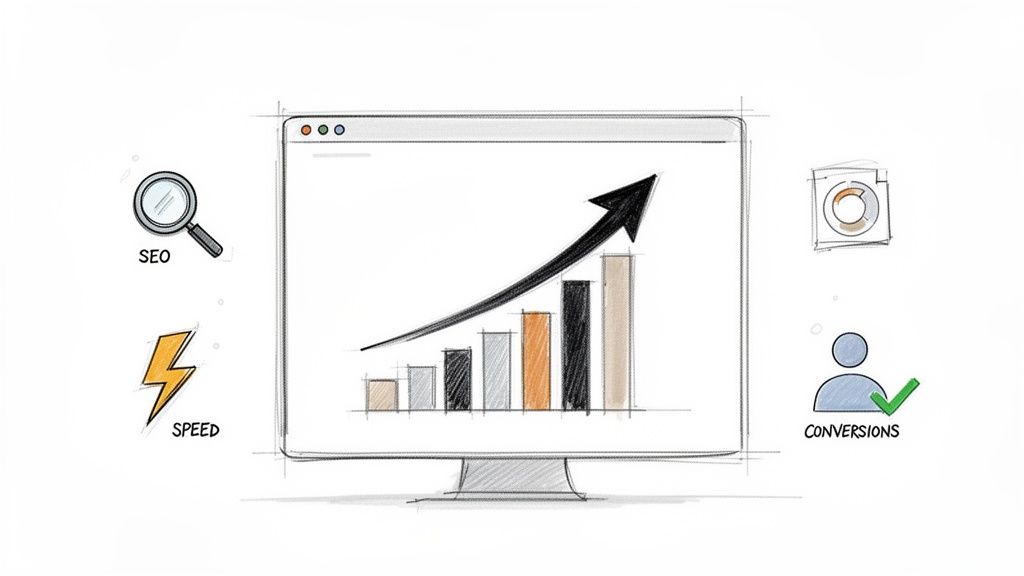
Choosing a bespoke website isn't just about getting a unique look; it's a serious business decision that delivers a solid return. The advantages go way beyond the technical details. We're talking about direct drivers for business growth, where clean code and smart design turn into real leads, more sales, and a stronger foothold in your market.
One of the biggest wins is in search engine visibility. Template-based sites often come packed with bloated, generic code that can slow things down. A bespoke build, on the other hand, is lean and built specifically for you. This means search engines like Google can crawl and index your site much more effectively, laying the groundwork for brilliant SEO.
Better yet, the entire site architecture is planned from day one to support your SEO strategy. This careful approach creates a logical structure that helps you climb the rankings for the keywords that matter most to your business. If you want to get into the nuts and bolts, our guide on how to improve your SEO rankings is a great place to start.
A Superior User Experience That Actually Converts
A bespoke website is built with your specific customer in mind. The whole point is to iron out every single wrinkle that might make a visitor click away, whether it's a confusing menu or a clunky payment process. This focus on user experience (UX) isn't just for show—it’s about making it dead simple for people to do what you want them to do.
This obsession with UX directly impacts your bottom line. When a website is intuitive and a pleasure to use, visitors stick around longer, explore more, and are far more likely to become customers. The key benefits are clear:
- Higher Conversion Rates: A smooth, logical path from the first click to the final purchase means more sales and enquiries.
- Increased Customer Loyalty: A great online experience builds trust and keeps people coming back for more.
- Lower Bounce Rates: When visitors quickly find what they're looking for, it signals to Google that your site is a quality result.
Gaining a Genuine Competitive Edge
In a sea of businesses using the same handful of templates, a unique, high-performing website makes your brand impossible to ignore. It helps you stand out, not just visually but with features your competitors can't easily copy with an off-the-shelf theme.
This is especially critical now that site performance is so important for UK businesses. Website speed, for example, is directly tied to revenue. Studies have shown that a mere one-second delay in page load time can lead to a 7% drop in conversions. By building a site optimised from the ground up, you can achieve lightning-fast load times and hold onto customers who would otherwise drift away.
Think of a bespoke website less as an expense and more as a high-performance engine for your business. It’s the foundation for top-tier SEO, an exceptional user experience, and a brand identity that truly sets you apart from the pack.
How a Bespoke Website Is Built, From Plan to Launch
So, what does it actually take to build a bespoke website? It’s not some mysterious, behind-the-curtain process. It’s a structured, collaborative journey that turns your business goals into a powerful online presence. Forget just picking a theme and changing the colours; this is a meticulous, step-by-step approach where every decision is made for a reason.
Understanding the different website development processes out there helps you see why this method is so effective. The entire project is broken down into a clear workflow, and you're involved from day one.
Stage 1: Discovery and Strategy
This is the foundation. Before anyone writes a single line of code, we need to have a lot of conversations to get under the skin of your business. We'll pinpoint exactly who your audience is, take a close look at what your competitors are doing, and set clear, measurable goals.
What do you really want people to do when they land on your site? Buy something? Fill out a form? This strategic blueprint is what we'll refer back to at every single stage.
Stage 2: Wireframing and Prototyping
With a solid strategy in place, we start sketching out the skeleton of your website. These aren't pretty mockups; wireframes are simple, black-and-white layouts. Their only job is to map out the structure and user flow. We figure out where the navigation, buttons, and contact forms will live to make sure the user’s journey from A to B is as logical and effortless as possible.
From there, we often build an interactive prototype. This lets you click through a basic version of the site, giving you a tangible feel for how it will work. It’s the perfect time to spot any clunky navigation or confusing steps before we get into the visual design.
A well-planned wireframe is the difference between a website that just looks good and one that actually works. It prioritises function over form, guaranteeing the final design is built on a solid, user-centric foundation.
Stage 3: From Design to Deployment
Once we've all agreed on the blueprint, the real magic starts to happen. We move from structure to style, then to the technical build and finally, the launch.
-
Visual Design: This is where we breathe life and personality into the wireframes. Designers will bring in your brand’s colour palette, typography, and imagery, creating a unique visual identity that truly connects with your audience.
-
Development and Coding: The approved designs are passed over to the developers. They're the ones who write the clean, efficient code that makes everything work, building out all the custom features and integrating any other systems you need.
-
Testing and Quality Assurance: Before the site sees the light of day, it goes through its paces. We test it relentlessly across different browsers, devices, and screen sizes to hunt down and squash any bugs.
-
Launch: When we're confident everything is perfect, we deploy the website to your hosting server and flick the switch. It’s officially live for the world to see.
Is a Bespoke Website the Right Choice for You?
Deciding to go bespoke is a major business decision, one that’s tied directly to how mature and ambitious your company is. It’s certainly not the right move for everyone right from the get-go.
For a new start-up, for example, grabbing a template to test the waters and see if an idea has legs makes perfect sense. It keeps the initial costs down and gets you online quickly.
But there comes a point for many growing businesses where an off-the-shelf solution starts to feel less like a tool and more like a straitjacket. This usually happens when you’re ready to scale up, need to connect with specific systems like your CRM, or want to offer a unique feature that a pre-built theme just can't handle.
When to Make the Leap
A bespoke website is for businesses that have simply outgrown their digital home. It's for companies that need a solid foundation to build their future on, whether that’s creating an unforgettable customer experience or gaining a real competitive advantage.
So, when is it time to take the plunge? It’s probably the right choice when:
- You need custom functionality: Your day-to-day operations depend on features that you can't just bolt on with a plugin.
- Brand differentiation is critical: You're fighting for attention in a crowded market and need a user journey that people will remember.
- Scalability is a priority: You're planning for serious growth and can't risk being slowed down by technical ceilings.
The journey to a bespoke website follows a well-trodden path, moving logically from planning and design right through to the final build. This flowchart gives you a clear picture of the stages involved.
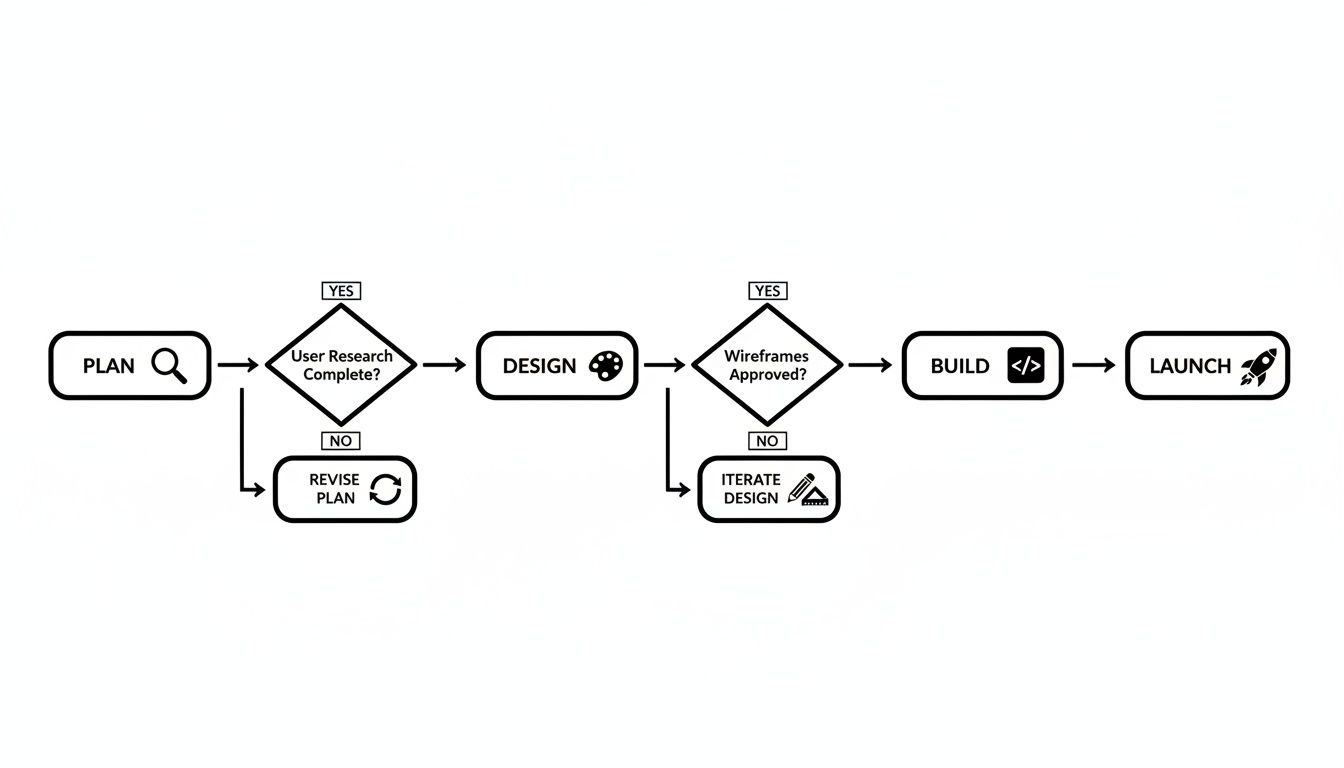
Taking a structured approach like this ensures that the final website is perfectly aligned with your business goals from day one. In the competitive UK market, where 78% of SMEs are already online, having a standout presence has never been more crucial. If you're weighing up your options and think you need something special, our team offers an expert WordPress website design service tailored to these exact needs.
Choosing a bespoke website is a declaration that your business is ready for the next level. It’s an investment in a platform built not for where you are now, but for where you are going.
Still Have Questions About Bespoke Websites?
It's completely normal to have a few questions buzzing around your head even after you see the benefits. It's a big decision! Let's walk through some of the practical queries I hear most often from business owners, covering everything from the price tag to what happens after launch.
What’s the Real Cost of a Bespoke Website in the UK?
This is the big one, and the honest answer is: it depends. For a small or medium-sized UK business looking at a bespoke WordPress site, you should realistically budget for a starting price of around £3,000, with more complex projects easily reaching £10,000 or more.
What pushes the price up? It's all about the features. A beautiful, straightforward "brochure" style website from a skilled freelancer will sit at the lower end of that scale. But if you're dreaming of a sophisticated e-commerce shop with custom WooCommerce features or tricky integrations with your other business software, you'll be looking at the higher end. Think of it less like a cost and more like an investment in a foundational business asset that's built to grow with you.
How Long Will I Have to Wait to Go Live?
Patience is key here. A well-managed bespoke website project typically takes between 8 and 16 weeks from our first chat to the day it goes live. That might sound like a while, but it's crucial for getting things right.
This timeframe allows for proper discovery, creative design phases, meticulous development, and—most importantly—thorough testing. If you need something really unique, like a private members' area or a specialised booking system, we'll need to factor in some extra time to perfect those details.
The real magic of a bespoke build is the collaboration. This timeline isn't just about coding; it's about giving us both enough time for feedback at every stage. This ensures the final website truly solves your problems and isn't just a rush job.
Will I Be Able to Update the Website Myself?
Yes, one hundred percent. This is one of the best things about building a bespoke site on WordPress. You get a completely unique, custom-made front-end that your visitors see, but you get to manage it all through the familiar, easy-to-use WordPress dashboard.
A good developer won't just hand you the keys; they'll customise the admin area specifically for you. This makes updating text, swapping out images, publishing a new blog post, or adding a new product an absolute breeze, no coding skills required.
Is a Bespoke Website Actually Better for SEO?
On the whole, yes. A bespoke website gives you a serious head start with SEO. Because it's built from scratch, the code is clean, light, and written specifically for what your site needs to do. This has a huge impact on site speed, which is a massive ranking factor for Google.
Everything from the site's structure and how your URLs are formatted to the nitty-gritty technical SEO elements can be planned from day one to perfectly align with your strategy. In contrast, many off-the-shelf themes come packed with unnecessary code and clunky features that can slow your site down and make it harder for search engines to understand.
A bespoke website is a high-performance machine, but it needs the right fuel to run properly. Vivihosting provides performance-focused, UK-based managed WordPress hosting engineered to keep your custom site incredibly fast, secure, and always online. Learn more about our complete website care plans.